A part of FTX survived, and it’s the case for the CLARITY Act
When FTX collapsed, the parts of it bound by law survived. Mainstream finance is now converging with digital assets, and the law built to protect it the same way is the one the Senate did not pass this week, argues Bullish's Randi Abernethy.
YayaNews contributes financial news and market context through the YayaNews editorial workflow.
When FTX collapsed, the parts of it bound by law survived. Mainstream finance is now converging with digital assets, and the law built to protect it the same way is the one the Senate did not pass this week, argues Bullish's Randi Abernethy.
A part of FTX survived, and it’s the case for the CLARITY Act
Opinion
A part of FTX survived, and it’s the case for the CLARITY Act
When FTX collapsed, the parts of it bound by law survived. Mainstream finance is now converging with digital assets, and the law built to protect it the same way is the one the Senate did not pass this week, argues Bullish's Randi Abernethy.
By
Randi Abernethy
,
Tram Doman
|
Edited by
Cheyenne Ligon
Updated
Aug 7, 2026, 2:37 p.m.
Published
Aug 7, 2026, 2:30 p.m.
4
min read
Make
preferred on
Share
Share this article
Copy link
X icon
X (Twitter)
Make
preferred on
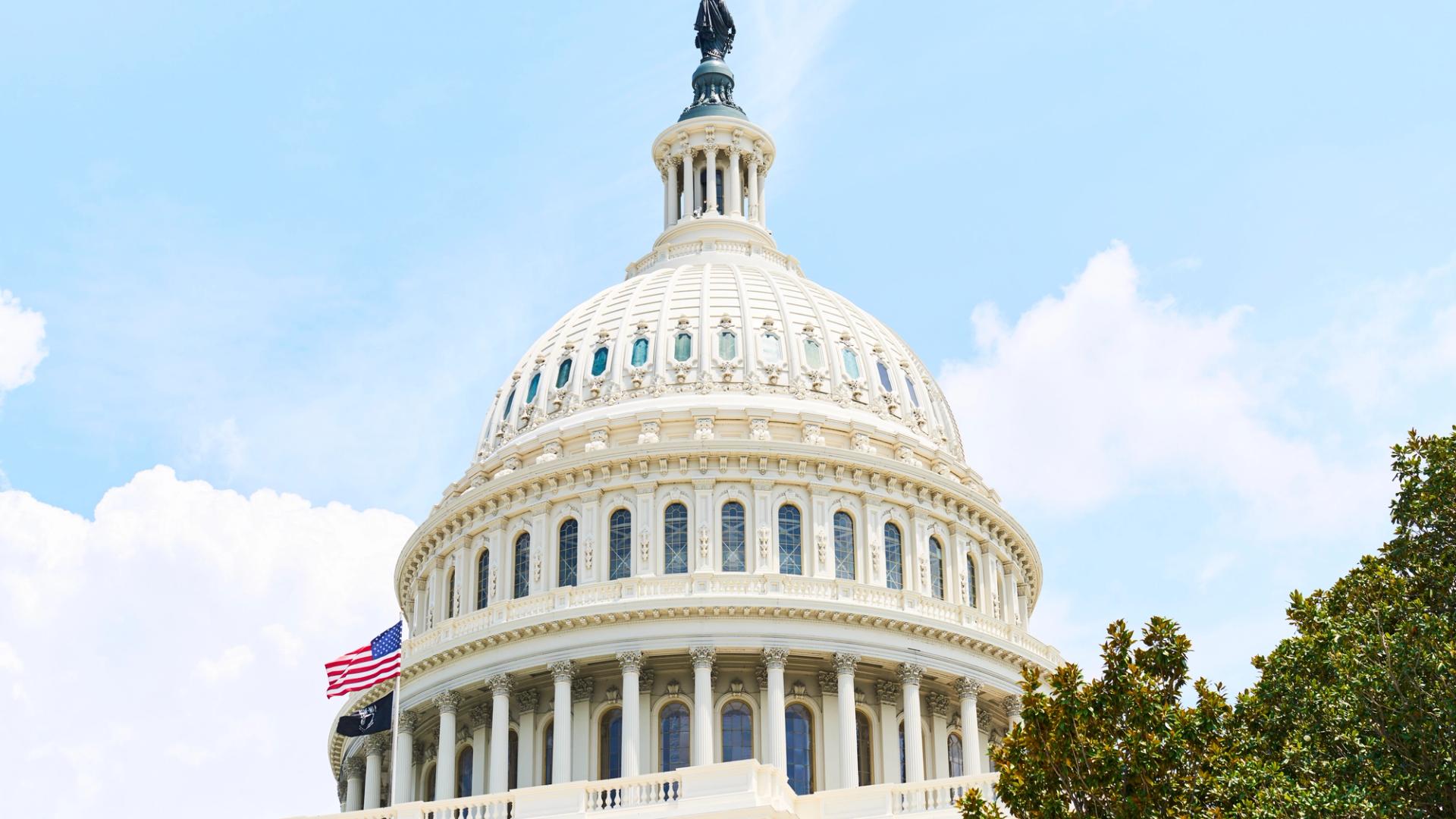
U.S. Capitol Building (Getty Images/aire images)
In the weeks the Senate spent not passing the CLARITY Act, the largest institutions in American finance kept moving onchain. JPMorgan tokenized ETF holdings through the Depository Trust & Clearing Corporations (DTCC) production pilot, and more than 50 firms, among them BlackRock and Goldman Sachs, have signed on to tokenize stocks and Treasuries through the same infrastructure. BlackRock's CEO calls tokenization a way to "update the plumbing of the financial system.” The matter before Congress has stopped being about crypto.
If you run a traditional desk and treat CLARITY as a problem for the digital asset industry rather than your own, consider 2008. A new instrument grew up fast, inside the regulated system, on rules that had never been stress-tested, and when it broke the loss did not stay where it started. It reached firms that never touched a subprime mortgage and
erased some $17 trillion in household wealth.
Randi Abernethy is the Head of Clearing and Group Risk at Bullish Exchange. She testified on the CLARITY Act before a House Financial Services subcommittee in July 2026.
Read her full congressional testimony here.
The parallel is not that tokenized assets are the next subprime; it is that a shock travels through shared plumbing whether or not you touched what broke. The wiring is no different now: stablecoins alone hold well over $100 billion dollars in Treasury bills, and if a large stablecoin breaks and is forced to sell, the shock lands in the funding markets a traditional desk relies on every morning. Federal Reserve staff have
flagged the risk;
it nearly happened in 2023, when a Circle’s USDC briefly lost its peg because its reserves sat in a failing bank. International bodies like the IMF warn that such a shock would now
travel faster than in 2008
, because these markets are volatile, without clearing requirements there is no clearinghouse to contain a default before it spreads. The financial machinery is being rebuilt on rules that are not yet law, and when the first crisis reaches it, the loss will not ask whether your desk went onchain.
The bill has backers well beyond crypto: Fidelity, Goldman Sachs, and Franklin Templeton have all urged Congress to pass it, arguing clear rules would protect investors. Its critics counter that the rules are too soft, and that argument deserves a hearing. A bill like CLARITY writes the binding frame required for nation-wide investor protection into federal law, ensuring firms are supervised by the federal agencies, setting out key protections such as the segregation of customer assets, conflict of interest management, capital adequacy and transparency, and leaves the details to rulemaking, in the same way that Dodd-Frank set the architecture and the agencies spent years filling it in. Whether to make any of it law at all is the question the Senate left unanswered this week, and from here the calendar only hardens: a thin window in September, then an election year.
So the protections stay what they are: at the federal level not law, but an interpretive notice sorting 16 tokens, a collateral pilot, a few no-action letters, a memorandum of understanding between two federal agencies, any of it revocable without a vote. The rest is left to the states, where investors get real protection in certain states, less elsewhere, and in some states none at all, none of it reaching a market that is national. The last great collapse already showed which protections hold and which give way.
When FTX failed, its offshore exchange misused its customers’ assets for years. But several entities under the FTX umbrella — including LedgerX, a CFTC-regulated exchange and clearinghouse — came through the collapse whole, their customers’ assets segregated and intact. LedgerX survived for one reason: its protections were law. Not a clever mechanism but a plain one, customer segregation a regulator required and checked, which held whether or not anyone chose to honor it once the panic set in. The unregulated part of FTX ran on promises. In one collapse, under one roof, law held and promises broke.
FTX sat offshore for a reason. For years the United States met this industry with enforcement in place of rules, and its capital and talent went where the rules were clear, to Europe, Asia, and the Gulf. The rest went where there was no real oversight, and that is the gap an exchange like FTX grows in. When Washington started to offer clarity, the firms started returning to the U.S: Nexo came back after years away, London's Wintermute opened a New York office, and Switzerland's Taurus set up in New York to serve its bank clients. Law protects what it can reach, and the CLARITY Act would make that migration permanent instead of leaving the next firm to choose the dark. It would make the regulated, onshore model the norm for firms such as Bullish, a NYSE-listed digital asset market infrastructure firm (and the parent company of CoinDesk) already regulated in financial centres including Frankfurt, Hong Kong and New York, now pursuing CFTC registration as a designated contract market and derivatives clearing organization.
The difference between a failure the system absorbs and one it does not is the line LedgerX already drew: federal law holds; promises do not. The CLARITY Act would write that line into law before the next crisis writes it in losses. Every system at scale meets its test of rigor. Only those built on law survive it.
Note: The views expressed in this column are those of the author and do not necessarily reflect those of CoinDesk, Inc. or its owners and affiliates
.
Latest Crypto News
1
Russia cracks down on unlicensed crypto exchanges it claims are linked to Ukraine
48 minutes ago
2
U.S. unexpectedly shed 23,000 jobs in July, putting Fed rate hikes in question
2 hours ago
3
After a Clarity Act funeral, the crypto world would keep turning
2 hours ago
4
Why Bitcoin's BIP-110 refuses to die despite near-zero miner support
3 hours ago
5
Bitcoin’s volatility has nearly disappeared. The risk hasn’t.
3 hours ago
6
Bitcoin hovers below $65,000 as Middle East tensions escalate further
4 hours ago
7
Coldcard fallout shows up onchain as 210,000 bitcoin leaves old wallets
5 hours ago
8
Crypto market maker Wintermute lands SEC approval to trade equities and ETF blocks
6 hours ago
9
Ethereum staking token weETH splits from restaking as rewards debate heats up
6 hours ago
10
Live updates: Bitcoin holding near $65,000 as U.S. lost jobs last month
7 hours ago
Latest Research
Building the Zcash Machine: Tachyon and Quantum Readiness
Building the Zcash Machine: Tachyon and Quantum Readiness
Zcash’s Tachyon upgrade aims to scale shielded payments, improve quantum readiness, and test whether its funding, security, and governance can hold.
By
CoinDesk Research
Jun 30, 2026
Commissioned by
GenZcash
Zcash’s Tachyon upgrade aims to scale shielded payments, improve quantum readiness, and test whether its funding, security, and governance can hold.
Why it matters
:
Zcash’s Tachyon upgrade aims to scale shielded payments, improve quantum readiness, and test whether its funding, security, and governance can hold.
View Full Report
More From
Opinion
Free Markets and Innovation, Sort Of
Crypto may have institutionalized, but it still trades like a rumor mill
Everyone has the perps convergence backwards
Crypto
CD20
$1,753.25
CD20 up 0.16 percent
0.16%
BTC
$64,962.36
BTC up 0.37 percent
0.37%
ETH
$1,911.76
ETH down 0.071 percent
0.071%
XRP
$1.03
XRP down 1.94 percent
1.94%
SOL
$73.60
SOL up 0.25 percent
0.25%
Original YayaNews editorial coverage, published for informational purposes.
This article is sourced from CoinDesk. It is for informational purposes only and does not constitute investment advice.
Topics & Symbols
Continue Reading
Related Reading
Upbit Lists PROM with KRW and USDT Trading Pairs, Opening New Opportunities for Mid-Cap Tokens
Upbit announced the addition of PROM KRW and USDT trading pairs, with a market cap of approximately $43.5 million. This article analyzes the significance, project background, and market impact for investors.

SEC Prepares Major Crypto Plan as Clarity Act Stalls: What It Means for Markets
As the Clarity Act remains gridlocked, the SEC is reportedly preparing a significant crypto regulatory plan. This article analyzes potential new rules covering DeFi, stablecoins, and exchanges, market reactions, and the global competitive pressures shaping U.S. oversight.

Binance Launches DOSUSDT Perpetual Contract: Market Impact and Investment Strategy Analysis
Binance announced the listing of the USDⓈ-M DOSUSDT perpetual contract on August 11, 2026. This article analyzes the announcement background, market reactions, and investment risks to help investors seize opportunities.
Ireland Plans Industry Standards for Illicit Crypto Use
The strategy prepared by the Irish government’s finance department included industry standards on crypto used for gambling and strengthening AML/CFT measures in certain cases.