Bank of Russia speeds up digital asset rules following fresh western sanctions
Under new proposals, the central bank will treat digital assets like standard securities, requiring exchanges to publish volume-weighted market prices.
YayaNews contributes financial news and market context through the YayaNews editorial workflow.
Under new proposals, the central bank will treat digital assets like standard securities, requiring exchanges to publish volume-weighted market prices.
Bank of Russia speeds up digital asset rules following fresh western sanctions
Policy
Russia outlines new digital depository rules ahead of fall crypto framework roll-out
The central bank's draft rules require digital asset platforms to hold up to $2.8 million in liquid capital as a sweeping regulatory framework looms.
By
Olivier Acuna
|
Edited by
Jamie Crawley
Jul 28, 2026, 2:49 p.m.
2
min read
Make
preferred on
Share
Share this article
Copy link
X icon
X (Twitter)
Make
preferred on
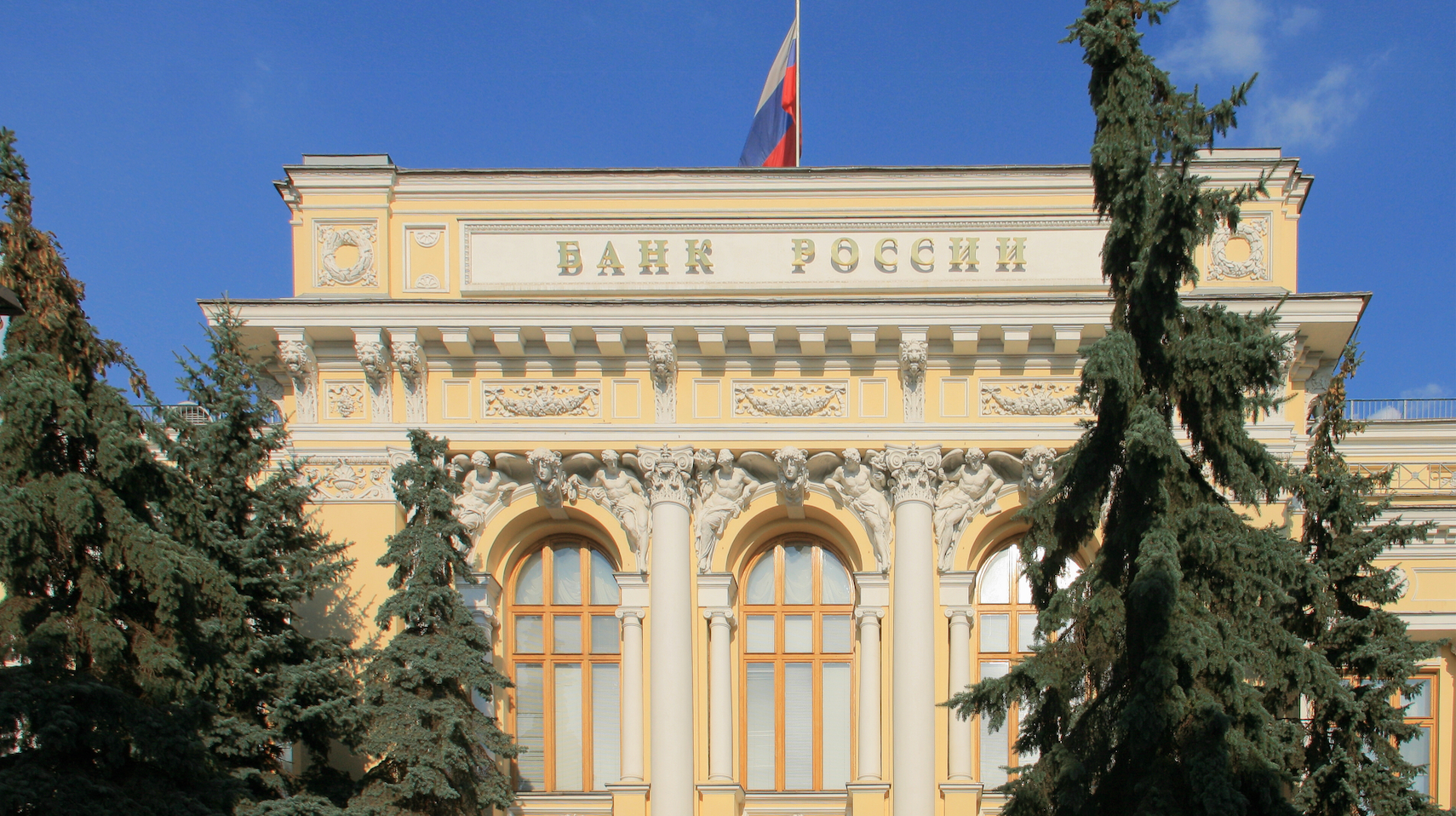
The Bank of Russia unveiled new crypto rules as the country prepares to roll-out a digital assets framework in September. (Ludvig14/Wikimedia Commons)
Summary
Show
The Bank of Russia has published draft regulations to create organized cryptocurrency markets, extending existing securities market rules to digital assets.
The proposals would establish regulated “digital depositories” with tiered capital requirements from 50 million to 250 million rubles, depending on the services they provide and the types of assets they hold.
The draft rules, issued under a new digital assets law taking effect by September, are open for public assessment and come shortly after the European Union announced a new sanctions package targeting Russian-linked crypto firms.
The Bank of Russia
published its first draft rules
as part of the introduction of cryptocurrency regulations in the country, including capital requirements for companies that hold and record digital assets.
The proposals would extend systems already used in Russia’s securities markets, including exchange trading, custody, record-keeping and disclosure rules, to digital assets.
The framework
would create “digital depositories,”
regulated companies that would record holdings of cryptocurrencies and other digital assets. They would need between 50 million ($570,000) and 250 million rubles ($2.8 million) in capital, depending on the services they provide.
Settlement depositories would require 250 million rubles ($2.8 million) in capital The requirement falls to 100 million rubles ($1.1 million) for firms that control crypto addresses or hold assets with foreign custodians, and 50 million rubles ($570,000) for other digital depositories.
Assets counted toward those capital requirements must be liquid, while eligible financial assets must meet the central bank’s credit-quality standards. The requirements would also apply to operators of electronic platforms that settle transactions involving digital financial assets.
The central bank will maintain registers of digital depositories, crypto exchange operators and companies that issue digital financial assets.
The regulations were drafted under a digital assets bill
adopted by the State Duma on July 21
and
approved by the Federation Council on July 24
. The cryptocurrency framework is scheduled to come into full force by September. The central bank’s proposals are not yet final and have been released for public assessment.
The central bank’s drafts and announcements on digital asset rules follows four days after the European Union (EU)
unveiled its 21st sanction package
targeting 14 crypto firms, including A7, a $120 billion stablecoin network.
Cryptocurrency
Regulation
Latest Crypto News
1
BlackRock, Fidelity, other Wall Street giants back the Clarity Act
11 minutes ago
2
Ethereum startup EthSystems bets privacy is key to getting banks on public blockchains
33 minutes ago
3
Hyperliquid is taking crypto perps deep into DeFi’s ‘money LEGO’ land
1 hour ago
4
Zcash seals $1.7 billion shielded pool as Ironwood upgrade activates
1 hour ago
5
Morgan Stanley debuts ether, solana exchange-traded products after bitcoin fund success
1 hour ago
6
Core Scientific lands AMD AI deal as bitcoin mining operation winds down
3 hours ago
7
Binance makes fighting crypto crime more difficult, says new report
3 hours ago
8
Apple kept fake bitcoin wallet on App Store after $875,000 theft report, lawsuit alleges
4 hours ago
9
Bitcoin’s recent stability hasn't been enough to spark a broader altcoin rally
4 hours ago
10
Bitcoin drops as South Korean stocks tumble, Senate shelves crypto Clarity Act
5 hours ago
Latest Research
Crypto Flows, Share and the Selective Rotation
Crypto Flows, Share and the Selective Rotation
Markets repositioned since June, but Binance held share (~55% user funds, ~24% spot) and drew net inflows in early July while the tracked market saw outflows.
By
CoinDesk Research
Jul 22, 2026
Markets repositioned since June, but Binance held share (~55% user funds, ~24% spot) and drew net inflows in early July while the tracked market saw outflows.
Why it matters
:
Markets repositioned since June, but Binance held share (~55% user funds, ~24% spot) and drew net inflows in early July while the tracked market saw outflows.
View Full Report
More From
Policy
BlackRock, Fidelity, other Wall Street giants back the Clarity Act
Inside the CME and CFTC’s battle over onchain perpetual futures
U.S. Senate puts off crypto Clarity Act for now as it focuses limited bandwidth elsewhere
Crypto
CD20
$1,739.71
CD20 down 1.14 percent
1.14%
BTC
$63,797.76
BTC down 1.62 percent
1.62%
ETH
$1,916.59
ETH down 1.14 percent
1.14%
XRP
$1.06
XRP down 2.57 percent
2.57%
SOL
$74.16
SOL down 2.26 percent
2.26%
Original YayaNews editorial coverage, published for informational purposes.
This article is sourced from CoinDesk. It is for informational purposes only and does not constitute investment advice.
Topics & Symbols
Continue Reading
Related Reading
Here's which Wall Street giants have backed the Clarity Act
BlackRock, Fidelity, Franklin Templeton, Goldman Sachs and SoFi have publicly endorsed the crypto market structure bill as the Senate's timeline tightens.
Apple left fake bitcoin wallet on App Store after $875,000 theft report, lawsuit says
A lawsuit alleges Apple kept a fake bitcoin wallet app on its store after one user reported an $875,000 theft, leading to another user having roughly $840,000 stolen.
Core Scientific lands AMD AI deal as bitcoin mining operation winds down
The deal accelerates Core Scientific’s pivot from bitcoin mining toward AI data centers, following the termination of its ASIC agreement with Block.

Police complain that Binance is making it harder to track crypto scammers: NYT
Prosecutors warn that the exchange's new rules drag out the time it takes to freeze stolen assets, giving cybercriminals a massive head start.