CZ Backs Crypto License Passporting Across ASEAN
CZ said firms licensed in one ASEAN market should face a simpler approval process when expanding into another, arguing that greater competition could lower costs and improve services.
YayaNews contributes financial news and market context through the YayaNews editorial workflow.

CZ said firms licensed in one ASEAN market should face a simpler approval process when expanding into another, arguing that greater competition could lower costs and improve services.
CZ Backs Crypto License Passporting Across ASEAN
DOGE
$0.07039
3.55%
TRX
$0.3250
2.09%
LINK
$8.33
5.64%
ZEC
$472.92
5.89%
ADA
$0.1570
5.42%
XRP
$1.05
4.53%
ETH
$1,886.24
4.22%
BTC
$63,557.17
2.79%
XMR
$340.87
2.40%
BNB
$565.29
1.74%
XLM
$0.1726
5.28%
SOL
$73.42
4.21%
HYPE
$55.29
7.81%
Written by
Ezra Reguerra
staff writer
Reviewed by
Bryan O'Shea
staff editor
Written by
Ezra Reguerra
staff writer
Reviewed by
Bryan O'Shea
staff editor
Binance co-founder CZ backs crypto license passporting across ASEAN
Latest News
Published
Jul 28, 2026
Binance co-founder CZ backed crypto license passporting across ASEAN to simplify approvals, reduce compliance costs and encourage competition.
Binance co-founder Changpeng “CZ” Zhao backed crypto license passporting across ASEAN, arguing that firms regulated in one market should be able to enter others through a simplified approval process rather than applying from scratch.
Speaking Tuesday during the “One ASEAN, One Digital Economy” fireside chat at the ASEAN Tech Summit Manila 2026, Zhao backed an idea raised by FinTech Alliance PH founding chair Lito Villanueva for regulatory passporting or license portability. Zhao said regulators could still review applicants but should not require them to complete another full licensing application from scratch.
A regional licensing framework could reduce compliance costs, encourage competition and make it easier for crypto and stablecoin services to operate across ASEAN’s fragmented regulatory markets. Member states regulate digital assets separately, creating multiple approval processes for companies seeking a regional presence.
“I think that’s mostly a political problem,” Zhao said of cross-border coordination, adding that the technology was simple. He said allowing more licensed platforms to compete could improve services and lower costs for consumers.
Binance co-founder Changpeng Zhao (left) with FinTech Alliance PH founding chair Lito Villanueva (right) at the ASEAN Summit in Manila. Source: Aubrey Paller
ASEAN has precedents for regional passporting
ASEAN does not currently have a bloc-wide passport for crypto companies, but regional regulators have created streamlined cross-border arrangements elsewhere in finance.
The ASEAN Capital Markets Forum’s (ACMF) operates the Collective Investment Schemes Framework, which
allows
a fund authorized in its home jurisdiction to be offered in participating host jurisdictions through a streamlined authorization process. The framework was first operationalized in Malaysia, Singapore and Thailand in 2014, while the Philippines joined in 2021,
according
to the ACMF.
The forum also
introduced
the ACMF Pass under its
Professional Mobility Framework
. The arrangement lets eligible investment advisers licensed in one participating jurisdiction receive fast-track registration to provide advisory services in another without obtaining another license.
Related:
Philippine bank BPI plans stablecoin payments pilot
These programs are narrower than the passporting idea Villanueva raised and Zhao supported, and remain subject to host-market requirements, but they show that ASEAN regulators have previously used mutual recognition and simplified approvals to deepen integration.
A direct crypto comparison exists in the European Union. Under the
Markets in Crypto-Assets Regulation
, an authorized crypto-asset service provider can use passporting rights to provide services across EU member states after notifying its home regulator of the countries and services involved.
Zhao said differences in national policies and regulatory approaches make alignment harder than building common technical rails. Still, he argued that firms already licensed in one market should face a lighter application process when entering another ASEAN jurisdiction.
Magazine:
Inside the ‘fake police raid’ that forced a $1M Bitcoin transfer
Subscribe to daily byte-sized crypto news from Cointelegraph
Subscribe
Cointelegraph is committed to independent, transparent journalism. This news article is produced in accordance with Cointelegraph’s
Editorial Policy
and aims to provide accurate and timely information. Readers are encouraged to verify information independently.
Asia
Law
Policy
Philippines
Regulation
More on the subject
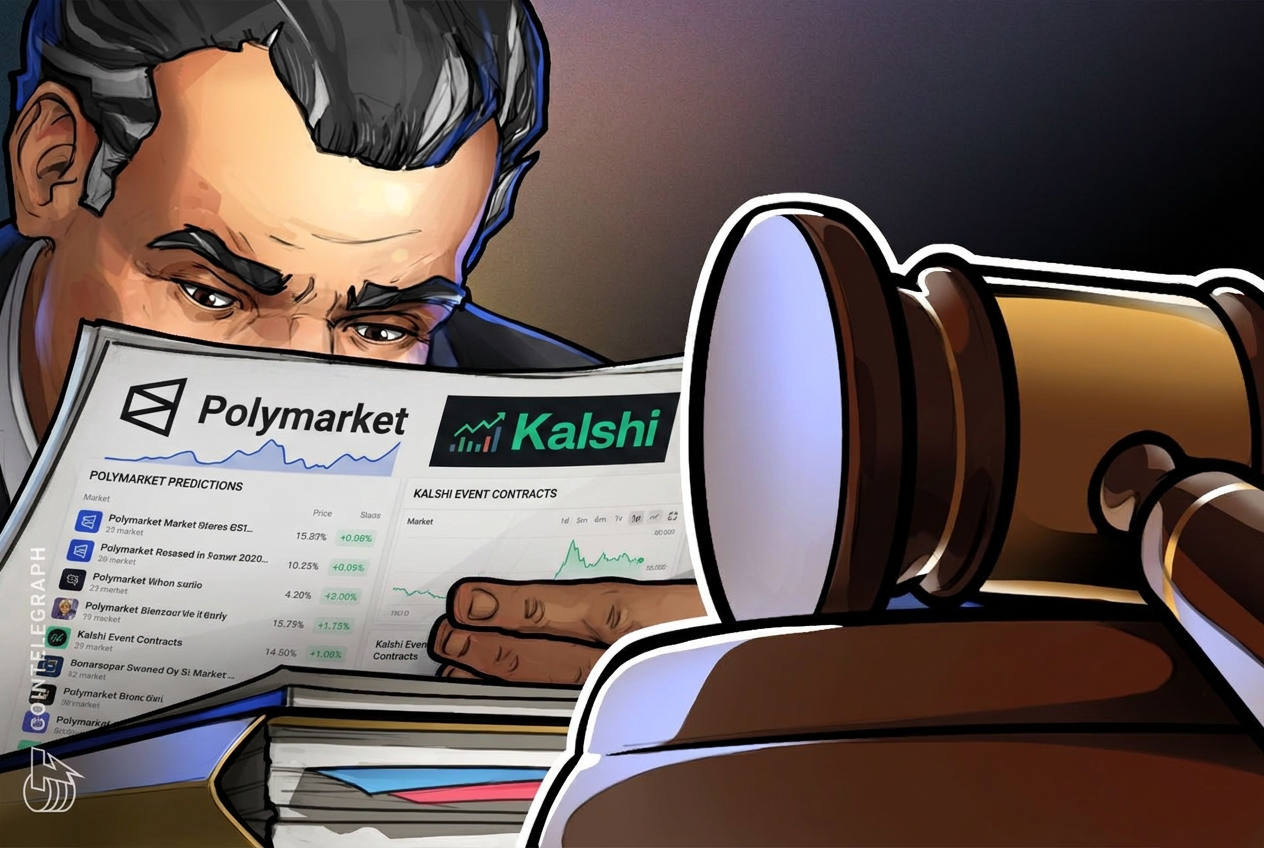
US judge temporarily blocks Minnesota prediction market ban
2 hours ago
Ezra Reguerra
News Brief
Zimbabwe admits seven fintech projects to regulatory sandbox
3 hours ago
Ezra Reguerra
News Brief
Binance disappears from Google Play in certain EU countries
17 hours ago
Helen Partz
News Brief
US judge temporarily blocks Minnesota prediction market ban
2 hours ago
Ezra Reguerra
News Brief
Zimbabwe admits seven fintech projects to regulatory sandbox
3 hours ago
Ezra Reguerra
News Brief
Binance disappears from Google Play in certain EU countries
17 hours ago
Helen Partz
News Brief
Original YayaNews editorial coverage, published for informational purposes.
This article is sourced from CoinTelegraph. It is for informational purposes only and does not constitute investment advice.
Topics & Symbols
Continue Reading
Related Reading
Apple Faces Lawsuit Over Alleged Bitcoin Wallet Scam
Apple faces a lawsuit after customers alleged a fraudulent Bitcoin wallet app on the App Store caused $1.8 million in losses, according to a court filing.

Bitcoin (BTC) price news: Price drops 2% after U.S. close while Korea’s Kospi plunges 10%
Leader in cryptocurrency, Bitcoin, Ethereum, XRP, blockchain, DeFi, digital finance and Web 3.0 news with analysis, video and live price updates.

Judge Halts Minnesota Ban on Prediction Markets
A US judge temporarily blocked Minnesota’s prediction market ban, allowing Kalshi and Polymarket US to operate while litigation continues.
Zimbabwe Adds Seven Fintech Projects to Regulatory Sandbox
Zimbabwe’s securities regulator admitted seven fintech projects to its sandbox, including four focused on asset, securities or infrastructure tokenization.