Prediction markets get first U.S. rule proposal as CFTC pursues contract reviews
The Commodity Futures Trading Commission opened a proposed rule for public comment that sets an approach to determine contracts in the "public interest."
YayaNews contributes financial news and market context through the YayaNews editorial workflow.
The Commodity Futures Trading Commission opened a proposed rule for public comment that sets an approach to determine contracts in the "public interest."
Prediction markets get first U.S. rule proposal as CFTC pursues contract reviews
Policy
Prediction markets get first U.S. rule proposal as CFTC pursues contract reviews
The Commodity Futures Trading Commission opened a proposed rule for public comment that sets an approach to determine contracts in the "public interest."
By
Jesse Hamilton
|
Edited by
Nikhilesh De
Updated
Jun 10, 2026, 2:35 p.m.
Published
Jun 10, 2026, 1:58 p.m.
4
min read
Make
preferred on
Share
Share this article
Copy link
X icon
X (Twitter)
Make
preferred on
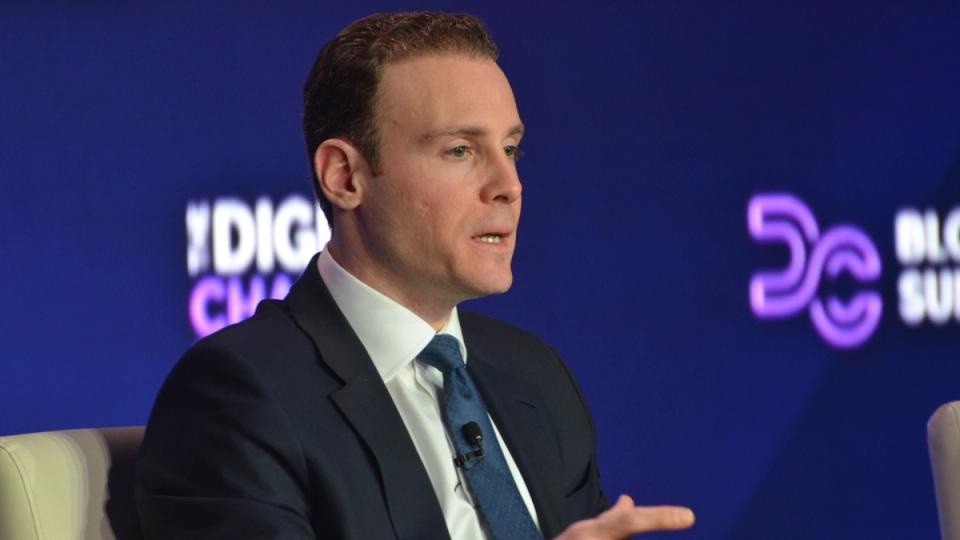
U.S. Commodity Futures Trading Commission Chairman Mike Selig has proposed the first prediction markets regulation. (Jesse Hamilton/CoinDesk)
Summary
Show
The U.S. Commodity Futures Trading Commission has issued its first notice of proposed rulemaking on prediction markets, suggesting a system by which it can review whether contracts are in the public interest.
The CFTC is seeking to carve a clear regulatory position to back the ongoing growth of the industry, which has drawn increased attention for its popular sports and political betting.
The U.S. Commodity Futures Trading Commission proposed its first prediction markets regulation on Wednesday,
pitching an approach
to how it can make widespread evaluations of whether contracts trip the federal standard for what's off-limits.
The agency that regulates U.S. derivatives has been a defender of prediction markets such as those run by Kalshi, Polymarket and Crypto.com, with Chairman Mike Selig making them a top legal and regulatory priority for the CFTC. He's been promising a new, tailored regulatory regime for the industry, and the new proposal addresses part of what may be multiple rules pursued by the regulator.
“The CFTC will protect the integrity of our regulated markets without standing in the way of responsible innovation,” Selig said in a statement. “This proposal gives the commission a durable, transparent framework to identify the contracts Congress directed us to scrutinize while letting legitimate markets move forward.”
Federal law holds
that contracts involving war, terrorism, assassination, illegal activity and gaming can be deemed outside of the public interest and not allowed. In practice and in its recent embrace of data-sharing agreements with professional sports leagues, the CFTC has welcomed the massively growing field of sports betting as an apparent public interest, and the new proposal continues that.
The platforms on which event contracts are traded are regulated exchanges under the CFTC, and the agency has said that exchanges are the first line of defense in determining whether contracts are legal and markets aren't manipulated or abused.
The proposal, which will be open to public comments before it can be revised and finalized, weighs a 90-day review process on public-interest determinations for individual contracts.
The agency would follow a three-part test before banning contracts. First, the contracts have to be based on something occurring, then they'd have to involve one of the categories that could place them outside the public interest, and finally the commission would have to formally decide that the contracts are outside the public interest.
The proposal offered an example of what wouldn't trigger the war or terrorism categories:
"An event contract that settles on whether a specified volume of crude oil transits the Strait of Hormuz during a specified period does not involve war or terrorism, even though the amount of oil flows through the Strait could change based on military conditions, because the settlement determining occurrence is a measurement of commercial shipping activity rather than an occurrence within a war or terrorism activity," it said.
As for what goes into deciding something is contrary to the interest of the U.S. public, the CFTC is leaning into weighing a series of factors rather than devising a simple test.
"A multi-factor approach enables the commission to weigh different dimensions of
potential harm or public benefit — including the event contract’s hedging or price-basing utility or potential to encourage illicit behavior — while also accommodating novel event contract designs and market developments and supporting innovation," according to the proposal.
The proposal, which would be set to go into effect within 60 days of completion, makes a case for protecting the increasingly popular sports betting, now a routine fixture of television advertising.
"The extent to which event contracts settle based on the overall outcome of a sporting event — including final scores, point differentials, win-loss results, tournament advancement, individual or team statistical performance or season long performance metrics — would be factors against a finding that the event contracts are contrary to the public interest," the CFTC indicated. "The commission preliminarily believes that these categories of sports event contract markets may serve price discovery functions and provide meaningful information."
The agency suggests it might be more likely to find something is outside the public interest "where the event contracts lack the potential to inform any economic,
commercial or financial decisions."
President Donald Trump has
recently expressed suppor
t for the track Selig has been on, saying in a social-media post that "Other Countries are after this new form of Financial Market, and we want to remain at the top."
While important rulemakings such as the first tailored regulations of the modern prediction markets are decisions of the five-member commission, the CFTC is currently short four members. The White House has left it a lone-chairman operation without further nominations, contrary to the laws underpinning the agency that contemplate three commissioners from the majority party and two from the minority. This is the first time the agency has been in this situation, and legal observers have suggested its policy work could be challenged at some stage.
Bringing the commission to full strength has been a demand of Democratic senators as the U.S. Senate negotiates the crypto market structure bill, the Digital Asset Market Clarity Act.
UPDATE (June 10, 2026, 14:35 UTC):
Adds details from the CFTC proposal.
Prediction Markets
Regulation
Latest Crypto News
1
Asset management giant Invesco files for tokenized fund targeting stablecoin reserve market
10 hours ago
2
Coinbase's Base blockchain resumes after two-hour outage disrupted network
12 hours ago
3
Strategy's yield-generating STRC stock is more correlated with BTC than ever
13 hours ago
4
Kraken in talks to buy 15% stake in DeFi lender Aave at $385 million valuation
13 hours ago
5
a16z-backed crypto firm rebrands, shifts focus to solving AI’s global copyright headache
14 hours ago
6
BlackBerry is making a massive comeback as an 'uncrashable' software layer for AI and robotics
15 hours ago
7
Strategy has a 10-month cash runway for dividends, but retail investors are losing faith
15 hours ago
8
Quant fund says bitcoin is near a major inflection point as rare onchain signals align
15 hours ago
9
Bitcoin tumbles to new multi-year low of $58,000, but a short-squeeze setup emerges
16 hours ago
10
Crypto for Advisors: Bitcoin: planning for inheritance
16 hours ago
Latest Research
CEX Volumes Drop to Lowest Since September 2024 as RWA Perps Hit Record High
CEX Volumes Drop to Lowest Since September 2024 as RWA Perps Hit Record High
In May, combined exchange volumes fell 3.45% to $4.41T; the lowest since September 2024. RWA perpetual futures volumes rose 10.4% against the trend, hitting a new all-time high.
By
CoinDesk Research
Jun 15, 2026
In May, combined exchange volumes fell 3.45% to $4.41T; the lowest since September 2024. RWA perpetual futures volumes rose 10.4% against the trend, hitting a new all-time high.
Why it matters
:
In May, combined exchange volumes fell 3.45% to $4.41T; the lowest since September 2024. RWA perpetual futures volumes rose 10.4% against the trend, hitting a new all-time high.
View Full Report
More From
Policy
Kraken sues crypto derivatives firm PowerTrade over 'misappropriated' funds claim
Post-prison CZ says time behind bars didn't hurt the billionaire's business after Binance
CoinEx denies claims it served as $3.84 billion gateway to sanctioned Iranian crypto firms
CD20
$1,622.85
CD20 down 2.47 percent
2.47%
BTC
$60,321.31
BTC down 2.44 percent
2.44%
ETH
$1,572.70
ETH down 4.93 percent
4.93%
XRP
$1.04
XRP down 3.71 percent
3.71%
SOL
$70.38
SOL up 1.47 percent
1.47%
Original YayaNews editorial coverage, published for informational purposes.
This article is sourced from CoinDesk. It is for informational purposes only and does not constitute investment advice.
Topics & Symbols
Continue Reading
Related Reading
Upbit Lists PROM with KRW and USDT Trading Pairs, Opening New Opportunities for Mid-Cap Tokens
Upbit announced the addition of PROM KRW and USDT trading pairs, with a market cap of approximately $43.5 million. This article analyzes the significance, project background, and market impact for investors.

SEC Prepares Major Crypto Plan as Clarity Act Stalls: What It Means for Markets
As the Clarity Act remains gridlocked, the SEC is reportedly preparing a significant crypto regulatory plan. This article analyzes potential new rules covering DeFi, stablecoins, and exchanges, market reactions, and the global competitive pressures shaping U.S. oversight.

Binance Launches DOSUSDT Perpetual Contract: Market Impact and Investment Strategy Analysis
Binance announced the listing of the USDⓈ-M DOSUSDT perpetual contract on August 11, 2026. This article analyzes the announcement background, market reactions, and investment risks to help investors seize opportunities.
Ireland Plans Industry Standards for Illicit Crypto Use
The strategy prepared by the Irish government’s finance department included industry standards on crypto used for gambling and strengthening AML/CFT measures in certain cases.