
Todd Blanche Appointed Acting Assistant Attorney General for DOJ Criminal Division: What Does the Architect of Crypto Enforcement Memo Mean for Industry?
Key personnel shift at the U.S. Department of Justice: Todd Blanche, author of the internal crypto enforcement guidance memo, takes the helm of the Criminal Division. This analysis explores his background and its potential impact on future regulatory enforcement, examining both opportunities and challenges for the crypto sector.
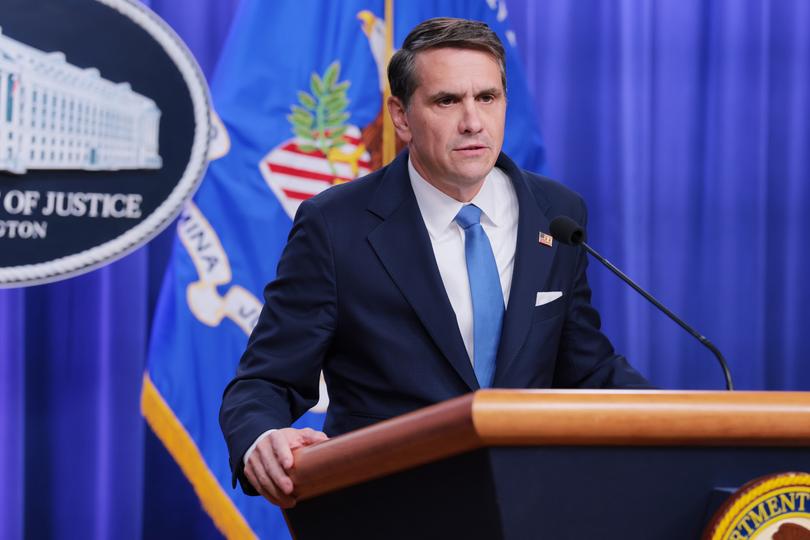
Todd Blanche, Author of DOJ Crypto Enforcement Memo, Appointed Acting Assistant Attorney General: A Pivotal Moment for Crypto?
A key personnel change at the U.S. Department of Justice (DOJ) is drawing intense scrutiny from the cryptocurrency industry. Todd Blanche, who led the drafting of the DOJ's closely-watched internal cryptocurrency enforcement memorandum, has reportedly been appointed as the Acting Assistant Attorney General for the DOJ's Criminal Division. This move could directly influence the future direction of U.S. government regulation and enforcement in the digital asset space, carrying significance far beyond a routine personnel shift.
Key Figure: From Memo Drafter to Enforcement Decision-Maker
Todd Blanche is no stranger in crypto legal circles. He is best known to the industry as the primary author of the DOJ's internal document widely referred to as the "Blanche Memo." This memorandum was designed to provide federal prosecutors with a guiding framework for investigating and prosecuting complex crimes involving cryptocurrency, such as money laundering, fraud, and sanctions evasion. Its core challenge was addressing the anonymity, cross-border nature, and technical complexity of blockchain technology within the existing legal framework.
Now, Blanche transitions from being one of the architects of this policy framework to the temporary head of the Criminal Division. This division is one of the DOJ's most critical units, overseeing the criminal prosecution work of U.S. Attorneys nationwide. Its jurisdiction covers key areas like financial crimes, fraud, and money laundering—precisely the core of current crypto enforcement actions. Analysts suggest this appointment means the enforcement principles and priorities that previously existed largely on paper will now be actively implemented and driven by their main designer.
Policy Winds: Expectations Shift from "Regulation by Enforcement" to "Clear Framework"
Blanche's appointment comes at a delicate crossroads for U.S. crypto regulation. On one hand, enforcement actions in the crypto space by agencies like the DOJ, Securities and Exchange Commission (SEC), and Commodity Futures Trading Commission (CFTC) have increased significantly in recent years, with numerous lawsuits against major exchanges, DeFi protocols, and allegedly fraudulent projects. This approach, dubbed "regulation by enforcement" by the industry, has sparked considerable debate over legal ambiguity.
On the other hand, the U.S. Congress is actively advancing multiple bills aimed at providing a clear regulatory framework for digital assets, and the market widely anticipates regulators offering clearer "rules of the road." In this context, an official with deep expertise in the complexities of crypto enforcement taking the helm of the Criminal Division could have two distinct potential impacts.
An optimistic view is that Blanche's profound understanding of technical details and legal challenges may lead the DOJ to adopt more precise and consistent enforcement strategies, avoiding blanket actions or moves based on misunderstandings. This could help crack down on genuinely illicit activities while preserving space for compliant innovation. His expertise could aid in distinguishing malicious behavior from technologically neutral innovative applications.
However, a more cautious perspective suggests this could make the DOJ's enforcement actions more efficient and penetrating. Because the leader has a clearer understanding of industry operations and potential vulnerabilities, enforcement resources could be deployed more effectively into high-risk areas. For projects attempting to operate in legal gray zones, regulatory pressure might increase rather than decrease.
Potential Impact on Markets and the Industry
From a market perspective, regulatory clarity remains a crucial prerequisite for institutional capital inflows. If Blanche's appointment ultimately leads to a more predictable federal enforcement environment, it could be viewed as a long-term positive. For instance, in areas like Anti-Money Laundering (AML) and Know Your Customer (KYC) compliance, clear DOJ guidance could help exchanges and financial service providers build more robust compliance systems, reducing operational risks stemming from uncertainty.
Simultaneously, this change could also influence ongoing or upcoming major legal cases. The DOJ's Criminal Division plays a central role in cases involving transnational crypto crimes and investigations into large platforms. Whether the leadership change affects the strategy or priority of certain cases will be a key area to watch.
From a broader perspective, this also reflects the increasing penetration of crypto expertise into U.S. government decision-making layers. As more technocrats and lawyers with relevant experience enter key positions, future policy debates and enforcement decisions will be based on a more solid foundation of understanding. This could gradually change the current dynamic where regulators and the industry often seem to be speaking different languages.
Future Outlook: Short-Term Stability and Long-Term Evolution
It's important to note that an "Acting" appointment is typically transitional. Whether Blanche remains in the position long-term, and whether his policy stances can be fully implemented, will also depend on higher-level political appointments and the overall crypto strategy of the administration. Therefore, his direct impact in the short term may be more evident in the continuity and professionalism of enforcement actions rather than a sharp policy shift.
In the long run, this personnel change symbolizes a deeper trend: cryptocurrency is no longer a fringe topic for legal and financial systems; it requires and is being integrated into mainstream governance frameworks. The fact that a key position within the DOJ, the nation's premier law enforcement agency, is now held by an expert proficient in this field marks a new, more mature phase in digital asset regulation. Industry participants need to prepare for a new era where regulators are "more knowledgeable."
Risk Disclosure
The above content is based on analysis of publicly available information and is for reference only. It does not constitute any investment advice. The cryptocurrency market is highly volatile, and regulatory policies are in a period of rapid evolution. Investors should fully understand the associated risks and make independent decisions prudently.
Disclaimer
This article synthesizes information from public sources such as RSS feeds. It is intended for informational purposes only and does not constitute any investment advice. Financial markets carry risks; invest with caution. Data and opinions are current as of the time of writing and may change with market developments.
Begin Your Trading Journey
Yayapay offers secure and convenient global asset trading services. Register Now →
Topics & Symbols
Continue Reading
Related Reading
Ethereum Dencun Upgrade Deep Dive: Layer2 Fees Plummet 90%, How Will DeFi & NFT Ecosystems Be Reshaped?
One week after the Ethereum Dencun upgrade, the core feature EIP-4844 has caused transaction fees on major Layer2 networks to plummet. This article analyzes on-chain data to explore the long-term impact on ecosystems like Arbitrum and Optimism, DeFi composability, NFT mass adoption, and the emerging competitive landscape.

Analysis of Bitcoin ETF's Consecutive Net Outflows: Rising Risk-Off Sentiment Weighs on Short-Term Price
This article analyzes the recent reversal in Bitcoin spot ETF fund flows, explores the underlying market risk-off sentiment linked to macroeconomic uncertainty, and interprets the short-term and long-term implications for the cryptocurrency market.

Ethereum Foundation Completes 70,000 ETH Staking Goal: What It Means for the Market and Ecosystem | YayaNews Analysis
The Ethereum Foundation has completed its goal of staking approximately $93 million worth of ETH. This analysis explores the implications for ETH supply, network security, and the new normal for staking in the post-Shanghai upgrade era.

Ethereum's Dencun Upgrade One Month Later: Layer2 Fees Plummet 90%, How is ETH's Value Narrative Being Reshaped?
A deep dive into the on-chain data one month after Ethereum's Dencun upgrade, revealing its revolutionary impact on Layer2 transaction fees, exploring the current ecosystem boom, and interpreting the new value capture narrative for ETH from settlement fuel to security cornerstone.
