U.S. Senate puts off crypto Clarity Act for now as it focuses limited bandwidth elsewhere
The majority leader is pursuing floor time for unrelated bills as the crypto industry waits for its policy effort to get its chance for votes.
YayaNews contributes financial news and market context through the YayaNews editorial workflow.
U.S. Senate puts off crypto Clarity Act for now as it focuses limited bandwidth elsewhere
Policy
U.S. Senate puts off crypto Clarity Act for now as it focuses limited bandwidth elsewhere
The majority leader is pursuing floor time for unrelated bills as the crypto industry waits for its policy effort to get its chance for votes.
By
Jesse Hamilton
|
Edited by
Nikhilesh De
Jul 27, 2026, 11:55 p.m.
4
min read
Make
preferred on
Share
Share this article
Copy link
X icon
X (Twitter)
Make
preferred on
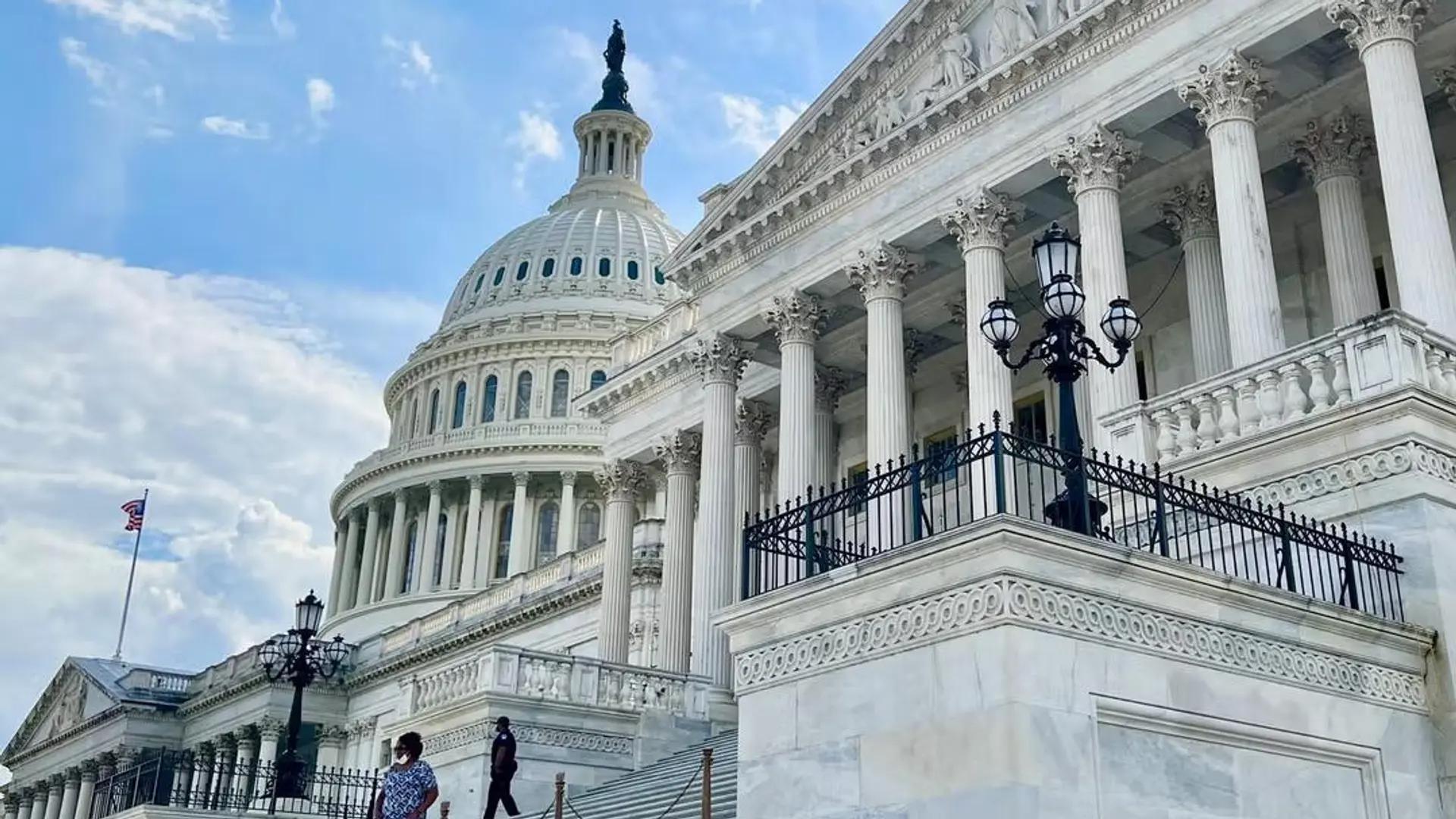
The U.S. Senate will deal with Russia before it can deal with the crypto Clarity Act. (Jesse Hamilton/CoinDesk)
Summary
Show
The U.S. Senate will move on to a couple of other matters while lawmakers debate the details of the crypto Clarity Act, according to a schedule set out by Majority Leader John Thune to first pursue nominations and a Russia sanctions bill.
The Clarity Act could still get some preliminary Senate action next week, though that’s the final week before the chamber begins its summer recess, potentially shifting Clarity’s next window to September.
The U.S. Senate has shelved the crypto Digital Asset Market Clarity Act for the moment as it proceeds with different bills on Russian sanctions and federal nominations, further setting aside the industry's central policy effort and reducing its available runway in a crowded Senate agenda.
Majority Leader John Thune started pursuing
a package of nominees
on Monday and expected to shift
to a Russia sanctions bill Tuesday night,
at which point he's set to start its cloture process. The arcane Senate procedure to manage bill debates involves a number of steps and waiting periods before legislation typically get to a final vote, and the chamber's procedures generally limit it to one disputed bill at a time. That means it's unlikely the body can move on the Clarity Act before the other matters get sorted or expire, which could take days.
The Russia bill would impose sanctions on the country's leadership and tariffs for trading partners, and it's dedicated now to the recently deceased senator who supported it, Lindsey Graham. Plus, Graham's funeral this week will
occupy the chamber's attention Tuesday and Wednesday
, in Washington and South Carolina.
Bottom line: Clarity isn't likely to come up for voting before next week — the final days before the chamber's summer break is set to start on August 8. The hotly debated market structure bill isn't yet ready for a vote, anyway, as the parties continue to try to seek a compromise on a contentious provision that's stood in the way of a deal: the ban against senior government officials, including President Donald Trump, backing crypto projects.
Thune's office had told CoinDesk last week that his next floor-time priority would go to the Russia legislation. While the majority leader also said he hopes to get to Clarity before the break, he said the leadership would have to "see where the votes are."
At this point in the Senate calendar, every hour of floor time is a precious commodity, and the debate over the Clarity Act still hasn't settled some of the major outstanding points — especially the section on government ethics, which was the topic of a Monday event hosted by Democrats opposing the Clarity Act and the president's crypto activities.
Having significant disagreements at this stage could narrow the chances that Clarity can become law in 2026, potentially throwing the industry into some uncertainty over the timeline for U.S. regulations. If this legislation tanks, the next best avenues for regulatory legitimacy is the ongoing implementation of the Guiding and Establishing National Innovation for U.S. Stablecoins (GENIUS) Act and the policy efforts at the U.S. Securities and Exchange Commission and the Commodity Futures Trading Commission.
In the Senate, the best hope for the industry at this point may be get its own preliminary push into the cloture process just before the lawmakers scatter on their recess.
Though a similar version of the Clarity Act had already advanced in the House of Representatives, the Senate has tended to be the greater bottleneck for legislative progress. In this case, it was initially hung up for months on the debate between the crypto sector and bankers on the treatment of stablecoin yield, which resulted in a compromise that limited stablecoin rewards programs to formats that wouldn't resemble (and compete with) yield-bearing bank deposits. Then the debate shifted toward the crypto limits on government officials.
Last week, that ethics section reached a potential breakthrough with an agreement from Trump that he'd accept the provision to limit his interactions with digital assets. While White House officials touted the historic, unprecedented ethics constraints, Democrats quickly countered that the restrictions didn't go far enough to curtail Trump's lucrative crypto empire. Still, both sides agreed to keep talking.
The House and Senate both return for a few weeks in September. But that's the end of the available floor time. And after the November elections, Congress will enter its so-called lame duck session in which defeated and retiring lawmakers will be serving out their final weeks until the next session of Congress begins in January. Lame duck sessions sometimes produce legislation in what can be a chaotic period of desperate dealmaking, though they can also lock up with political paralysis.
Even if the Clarity Act passes in the Senate, it must return for another approval in the House, where recent infighting among Republicans has gotten in the way of action on other initiatives. But if it clears both sides of Congress, it can head to Trump's desk to be signed into law.
In recent weeks, the president had refused to sign an unrelated bipartisan housing bill, because he's taken a stand against all legislation until lawmakers send him a bill that demands new voter-identification requirements before the midterms. He's actively called for the Clarity Act to be completed, though it's unclear whether it'll get a free pass. Either way, after a 10-day period of inaction from the president, an approved bill would automatically become law.
Clarity Act
Regulation
Latest Crypto News
1
Kalshi, Polymarket win pause against Minnesota's prediction market ban
49 minutes ago
2
Bitcoin shrugs off AI selloff but high-stakes Fed meeting could determine what's next
4 hours ago
3
Crypto’s favorite $90 trillion trading product is coming to Wall Street, but big banks are taking it slow
6 hours ago
4
Digital asset trading platform Uphold cuts 17% of global headcount as crypto winter bites
7 hours ago
5
What are perps, anyway? Everything you need to know about crypto’s hottest trading instrument
9 hours ago
6
Fanatics buys regulated exchange in bid to grow prediction markets business
9 hours ago
7
Cantor is advising crypto bank AMINA on path to potential public listing
9 hours ago
8
Lido begins moving $16.5 billion in staked ether to cut validator count by a third
10 hours ago
9
Thailand's SEC alleges Bitkub concealed cyberattack that led to $50 million hack
10 hours ago
10
Nvidia forms 37-member AI security alliance without OpenAI, Anthropic or Google
10 hours ago
Latest Research
Crypto Flows, Share and the Selective Rotation
Crypto Flows, Share and the Selective Rotation
Markets repositioned since June, but Binance held share (~55% user funds, ~24% spot) and drew net inflows in early July while the tracked market saw outflows.
By
CoinDesk Research
Jul 22, 2026
Markets repositioned since June, but Binance held share (~55% user funds, ~24% spot) and drew net inflows in early July while the tracked market saw outflows.
Why it matters
:
Markets repositioned since June, but Binance held share (~55% user funds, ~24% spot) and drew net inflows in early July while the tracked market saw outflows.
View Full Report
More From
Policy
Kalshi, Polymarket win pause against Minnesota's prediction market ban
Thailand's SEC alleges Bitkub concealed cyberattack that led to $50 million hack
2 weeks left for Clarity: State of Crypto
Crypto
CD20
$1,726.49
CD20 down 2.90 percent
2.90%
BTC
$63,701.87
BTC down 2.16 percent
2.16%
ETH
$1,886.66
ETH down 2.83 percent
2.83%
XRP
$1.06
XRP down 4.00 percent
4.00%
SOL
$74.04
SOL down 2.96 percent
2.96%
Original YayaNews editorial coverage, published for informational purposes.
This article is sourced from CoinDesk. It is for informational purposes only and does not constitute investment advice.
Topics & Symbols
Continue Reading
Related Reading
Kalshi, Polymarket win pause against Minnesota's prediction market ban
A federal judge ruled that Minnesota's law criminalizing prediction markets would probably violate the federal Commodity Exchange Act.

New York AG Warns CLARITY Act Could Weaken Crypto Enforcement
New York Attorney General Letitia James warned the CLARITY Act could weaken state crypto enforcement and called for tougher platform rules.

Bitmine Buys More Ether, Bringing Holdings to 5.79M ETH
Bitmine added nearly 10,000 ETH over the past week, increasing its holdings to 5.79 million Ether, or about 4.8% of Ethereum’s total supply, as ETH continues to outperform Bitcoin.

Cross River to Provide Banking Infrastructure for X Money
X Money will use Cross River’s banking infrastructure to enable peer-to-peer payments, interest-bearing accounts and Visa debit cards as X expands its financial services platform.