Fed Interest Rate Policy and US Stock Market Analysis: Where Are the Three Major Indices Heading?
In-depth analysis of Fed policy divergence and its impact on the Dow Jones, Nasdaq, and S&P 500, combined with the latest economic data to assess the mid-term outlook for US stocks and identify key market decision points.
Fed Policy Divergence Intensifies, US Stock Market Faces Key Mid-Term Choice
Wall Street is currently in a delicate policy observation window. Uncertainty over the Federal Reserve's monetary policy direction is intensifying divisions among market participants, as US stock indices hover near record highs while awaiting a clear policy signal. This article will analyze the Fed's interest rate path, economic data performance, and market valuation from three dimensions to deeply examine the key choices facing US stocks in the medium term.
I. Fed Policy Divergence: The Tug-of-War Between Rate Cut Expectations and Reality
Since 2024, the Federal Reserve's monetary policy direction has been a core variable affecting US stock trends. As inflation data has gradually declined, market expectations for Fed rate cuts have transitioned from optimism to caution. According to the Fed's latest policy statement, the federal funds rate remains at current levels, but the dot plot shows most officials still have significant divergences on the rate path for 2025.
Looking at the latest economic data, while inflationary pressure has significantly eased from its peak, it remains above the Fed's long-term target of 2%. The core PCE price index remains at relatively elevated levels, which has kept the Fed cautious on rate cut decisions. However, changes in the labor market are also worth noting—while the unemployment rate remains at historical lows, job growth has shown signs of marginal slowdown.
Market analysts generally believe the Fed is in a "waiting period." On one hand, premature rate cuts could reignite inflationary pressure; on the other hand, an overly conservative monetary policy stance could unnecessarily restrain economic activity. This policy dilemma directly influences investors' pricing logic for US stocks in the medium term.
II. Mixed Economic Data: Soft Landing Expectations and Risks Coexist
Judging the medium-term trend of US stocks requires a comprehensive assessment of signals from current economic data. From a positive perspective, the US economy overall maintains resilience—consumer spending remains stable, and corporate earnings expectations, while revised downward, still maintain positive growth.
However, there are also warning signals at the data level. The manufacturing PMI has recently shown fluctuations, with manufacturing activity in some regions showing contraction signs. The real estate market has performed weakly under high interest rate environments, with home sales data falling below market expectations. These structural challenges have caused market divisions on "soft landing" expectations.
The key point is that current economic data has not yet formed a clear one-sided trend. Optimists believe sustained inflation decline provides the Fed with policy room, and while economic growth is slowing, it will not fall into recession; pessimists worry that the lag effects of high interest rate policies are gradually emerging, and economic challenges may be underestimated. This mixed data situation at the level directly results in US stocks lacking a clear trending direction at current levels.
III. Three Major Indices Show Divergence: The Paradox of Tech Stocks Leading and Value Stocks Lagging
Looking at the performance of the three major indices, the current market shows clear structural characteristics. The Nasdaq index has performed relatively strongly led by technology stocks, particularly the sustained high prosperity of the AI-related supply chain, which has provided valuation support for tech stocks. In contrast, traditional economic component stocks within the Dow Jones Industrial Average and S&P 500 have performed relatively flat.
Notably, this divergence reflects different pricing logic for the economic cycle behind the market. Tech stock investors focus more on long-term growth prospects and profit growth from innovation-driven momentum, while traditional cyclical stock investors are more sensitive to profit pressure from economic slowdown.
From a valuation perspective, the Nasdaq index's P/E ratio has reached historical high levels, and the increased valuation sensitivity of tech stocks means they react more directly to monetary policy changes. If the Fed's monetary policy stance turns hawkish, tech stocks may face greater correction pressure; conversely, if rate cut expectations intensify, tech stocks may continue to gain valuation expansion momentum.
IV. Policy Path Scenario Analysis: Where Are US Stocks Heading?
Synthesizing current information, the medium-term trend of US stocks may present the following scenarios:
Scenario One: Moderate Rate Cut
If inflation data continues to decline and the Fed begins implementing moderate rate cuts in mid-2025, an improved liquidity environment will favor US stock valuation recovery. Under this scenario, tech stocks and growth stocks may benefit from lower financing costs, while interest rate-sensitive sectors such as financials and real estate will also see fundamental improvements. Under this scenario, US stocks are expected to continue their震荡上行pattern, with the three major indices likely reaching new highs.
Scenario Two: Sustained High Interest Rates
If inflation decline is slower than expected and the Fed is forced to maintain current interest rate levels for longer, the high interest rate environment will continue to suppress stock valuations. Under this scenario, US stocks may face phased correction pressure, especially tech stocks with high valuations may experience significant valuation pullbacks. Defensive sectors such as healthcare and utilities may gain relative returns.
Scenario Three: Economic Recession
The most pessimistic scenario is an economic recession, forcing the Fed to turn to significant rate cuts to stimulate the economy. While liquidity will significantly loosen, a sharp decline in corporate earnings will offset monetary policy benefits, and US stocks may experience a V-shaped pattern—first falling then rising. At that time, low valuation and high dividend strategies will be favored by the market.
Current market pricing leans toward Scenario One, but the risks of Scenario Two should not be ignored. Investors need to closely monitor inflation and employment data in the coming months to adjust investment strategies in a timely manner.
V. Investment Strategy Recommendations: Focus on Structural Opportunities and Risk Control
Under the backdrop of policy expectation divergence, investors should adopt more refined investment strategies. First, it is recommended to focus on sector rotation opportunities benefiting from policy expectations—if rate cut expectations intensify, moderately increase allocation to interest rate-sensitive sectors; if policy maintains a tightening stance, tilt toward defensive sectors.
Second, at the stock selection level, it is recommended to pay more attention to the match between fundamentals and valuations. While tech stocks have long-term growth potential, current valuations have already reflected high growth expectations, requiring selection of targets with genuine technological barriers and earnings growth certainty.
Finally, risk control remains the most important investment discipline in the current environment. It is recommended to maintain reasonable cash positions to address market volatility, avoid excessive concentration in high-valuation growth stocks, and closely monitor changes in Fed policy signals to adjust portfolio risk exposure in a timely manner.
VI. Conclusion and Outlook
In summary, US stocks are currently at a critical point of policy expectation divergence. The uncertainty of Federal Reserve monetary policy, the complex signals from economic data, and historical valuation levels together constitute the decision background for US stocks in the medium term.
From a positive perspective, if inflation continues to decline and the economy maintains resilience, US stocks still have upward momentum; however, from a risk perspective, if policy tightening exceeds expectations or the economy experiences an unexpected slowdown, US stocks also face phased correction pressure.
For investors, the best strategy at this stage may be to maintain strategic composure and seize structural opportunities while controlling risks. Paying close attention to Fed officials' speeches and key economic data releases in the coming weeks will help better judge market direction and make corresponding decisions.
Risk Warning: The above content is for reference only and does not constitute investment advice. Investment involves risks, and caution is required. Investors should make investment decisions prudently based on their own risk tolerance and investment objectives. Market fluctuations may lead to investment losses, and past performance does not indicate future results.
Disclaimer:
This article is for information reference only and does not constitute any investment advice. Financial markets involve risks, and investment requires caution. Data and viewpoints in this article are as of the time of publication and may change with market conditions.
Start Your Trading Journey
Yayapay provides secure and convenient global asset trading services. Register Now →
标签
继续阅读
同栏目延伸阅读
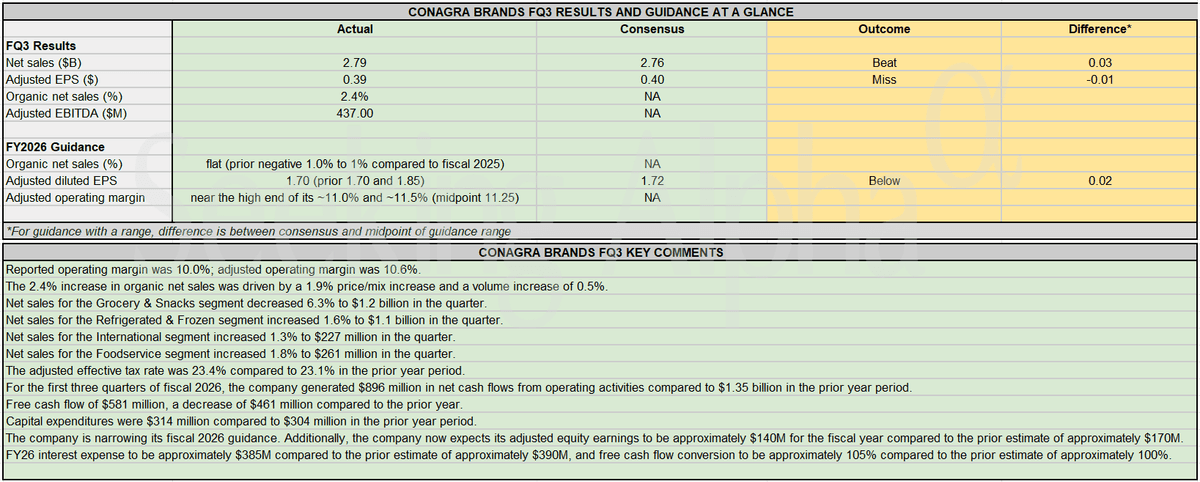
Conagra Q3财报:营收超预期但EPS不及预期
Conagra Brands公布2024财年Q3财报,营收超预期但每股收益低于预期,公司小幅收窄FY26业绩展望,股价承压。
AI浪潮下的华尔街投资机遇:Nvidia产业链全景解析与美股布局
深度解析AI芯片龙头Nvidia产业链崛起对美股板块格局的深远影响,全面探讨产业链上下游投资机会与风险,为投资者提供参考。

美联储官员放鹰美股承压回调 科技股估值面临调整
美联储官员密集释放鹰派信号,三大股指集体承压回调。科技股普遍承压,纳斯达克指数跌幅明显。分析短期调整性质及科技股估值风险,后市关注通胀数据与政策走向。

NVDA财报超预期点燃AI芯片股 纳斯达克指数创新高
英伟达财报业绩超预期,数据中心业务强劲增长,AI芯片板块集体走强,纳斯达克指数受科技股带动创新高,市场展望分析
