Tesla China Sales Continue Falling: Can the EV Giant Regain Growth Momentum?
In-depth analysis of multiple factors behind Tesla's declining sales in China, comparing with BYD and competitors, examining TSLA's global strategy shift and implications for the US EV sector.
Tesla is facing unprecedented challenges in the Chinese market recently. The electric vehicle (EV) giant once dominated the Chinese market with its first-mover advantage and brand effect. However, the latest market data shows that Tesla's China sales have declined for multiple consecutive quarters. This phenomenon has not only drawn significant attention from investors but also added new variables to the competitive landscape of China's new energy vehicle market. This article provides an in-depth analysis of the multiple factors behind Tesla's sales pressure in the Chinese market, compares Tesla's performance with competitors like BYD, and explores Tesla's global strategy adjustments and their potential impact on the US EV sector.
1. Analysis of Tesla China Sales Decline
According to data released by the China Passenger Car Association (CPCA), Tesla China's sales have shown significant volatility lately. Since 2024, Tesla's delivery volume in China has been trending downward, and its market share has contracted to varying degrees. This round of sales decline is not accidental but rather the result of multiple factors combined.
First, the competitive environment in China's new energy vehicle market has fundamentally changed. What was once a blue ocean market has now become a red ocean battlefield. Not only are traditional automakers accelerating their transformation into new energy vehicles, but a large number of new EV brands have emerged, with market competition far exceeding expectations. As an early foreign brand entering the Chinese market, Tesla still retains brand influence, but its advantages are gradually narrowing when facing attacks from local brands.
Second, there is a misalignment between Tesla's product update cadence and Chinese consumers' expectations. Tesla's core models, the Model 3 and Model Y, have been on the market for years. Although continuous facelifts and upgrades have been made, Tesla's product updates appear relatively conservative compared to Chinese brands that implement "minor changes every six months, major overhauls every year." This strategy may have worked during rapid market development, but with increasingly discerning consumers today, it may lead to the loss of some potential customers.
2. Competitors' Strong Rise: BYD Takes the Lead
While Tesla China faces sales pressure, BYD has achieved leapfrog growth. This Chinese company not only consistently ranks at the top of China's new energy vehicle sales but also poses a strong global challenge to Tesla.
BYD's success is not accidental but rather the concentrated embodiment of multiple advantages. At the technology level, BYD has a complete battery industry chain layout, from Blade Batteries to DM-i super hybrid technology, forming differentiated competitive advantages in core technologies. At the product level, BYD's dense product lineup covers every market segment from entry-level to premium, with a wide price range that can meet the needs of different consumer groups.
More notably, BYD has significant advantages in cost control. Relying on China's complete local supply chain system and scaled production capabilities, BYD can achieve more competitive pricing while maintaining quality. This cost advantage is particularly important in the current market environment where price wars are intensifying.
Apart from BYD, Li Auto, NIO, XPeng, and other emerging brands have also achieved good results in their respective market segments. Li Auto precisely targets family users with its extended-range technology route, NIO competes through differentiated service systems, and XPeng continues to deepen its presence in intelligent driving. The common characteristic of these brands is a better understanding of Chinese consumers, enabling rapid response to market demand changes.
3. Multiple Reasons Behind Tesla's Sales Pressure
An in-depth analysis of the reasons behind Tesla's sales decline in the Chinese market can be summarized as follows:
First, the fading brand mystique. In the early days of Tesla entering the Chinese market, the brand possessed high premium pricing power due to the founder's personal charisma, the "Iron Man"光环 (halo effect), and the positioning of being a Silicon Valley tech company. However, as Chinese consumers' understanding of EVs deepens and competitors continue to catch up, Tesla's differentiated brand advantage is no longer as evident as before.
Second, the dilemma of pricing strategy. Tesla initiated multiple rounds of price cuts in 2023, attempting to boost volume through lower prices. However, this strategy somewhat damaged the brand's premium image and also triggered dissatisfaction among existing owners. More importantly, frequent price fluctuations have created consumer expectations that "waiting will lead to even cheaper prices," which actually suppresses immediate purchase demand.
Third, narrowing intelligent driving advantage. Tesla's Autopilot intelligent driving assistance system was once its core competitive advantage in the intelligent driving field. However, Chinese brands' catch-up speed in this area has been astonishing. Huawei, XPeng, and others have already taken the lead in urban NOA (Navigate on Autopilot) functions, making Tesla's intelligent driving advantage no longer evident.
Fourth, service system shortcomings. Although Tesla's direct-sale model is innovative, its after-sales service network density is inferior to that of traditional automakers. Chinese consumers have particularly high expectations for after-sales service experience, and this shortcoming becomes more prominent when sales growth slows down.
4. Tesla's Global Strategy Adjustments
Facing challenges in the Chinese market, Tesla is making adjustments across multiple dimensions.
At the product level, Tesla is accelerating the launch节奏 of new models. The all-new Cybertruck has begun delivery in the US market, and the much-anticipated lower-priced model is also on the agenda. According to Tesla's official statements, a new model with more entry-level positioning will be launched at the appropriate time to cover a broader price range market.
In terms of production capacity layout, Tesla is advancing the optimization of global production capacity configuration. In addition to the existing Shanghai Gigafactory and California and Texas factories, Tesla also plans to establish production capacity in other regions of Europe and Asia to diversify geopolitical and supply chain risks.
In technology R&D, Tesla continues to increase investment in FSD (Full Self-Driving). Although commercial deployment still takes time, Tesla clearly aims to re-establish technological generational advantages in this field.
Notably, Tesla is transforming from a pure automotive company to an energy company. The development prospects of the energy storage business are widely viewed positively, which could become an important growth pillar for Tesla in the future.
5. Impact on US EV Sector
As a benchmark company in the global EV industry, Tesla's performance in the Chinese market holds significant benchmark value for the entire US EV sector.
From the perspective of sector valuations, Tesla's sales pressure may trigger market corrections in expectations for the entire EV industry's growth. Investors are beginning to re-examine the competitive landscape and growth logic of the EV industry. Some high-valuation emerging automakers may face valuation correction pressure.
From the perspective of competitive landscape, Tesla's predicament provides an opportunity for Chinese automakers to expand globally. BYD, CATL, and other Chinese companies are accelerating their overseas expansion, which could challenge traditional automotive powers and trigger a reshaping of the global automotive industry landscape.
From the supply chain perspective, Tesla's sales decline may affect performance expectations for its upstream suppliers. Segments such as lithium battery materials and automotive chips may be impacted, and investors need to pay attention to risks in related industrial chains.
However, it should also be noted that Tesla still possesses strong brand influence, technological accumulation, and global deployment capabilities. Its advantages in cost control and vertical integration have not disappeared. Once Tesla makes proper adjustments, it may still regain growth momentum.
6. Future Outlook and Investment Considerations
Looking ahead, competition in China's new energy vehicle market will become even more intense. The comprehensive escalation of price wars, feature wars, and service wars will test every automaker's comprehensive strength. For Tesla, how to better meet Chinese consumer needs while maintaining brand positioning will be key to whether it can reverse the situation.
For Chinese brands, Tesla's predicament is both an opportunity and a warning. While market share growth is gratifying, how to advance further in premiumization and internationalization is a proposition requiring continuous consideration.
For investors, the EV sector is undergoing a valuation digestion period, with increased volatility inevitable. When making investment decisions, it is necessary to comprehensively consider factors such as technological strength, cost control capabilities, market expansion capabilities, and cash flow status, rather than simply relying on sales data or market share.
Risk Warning
The above content is for reference only and does not constitute any investment advice. Investment in Tesla and the EV sector involves multiple risks, including but not limited to: intensified industry competition may continue to suppress corporate profit margins through price wars; global macroeconomic fluctuations may affect consumer demand; technological route changes may disrupt the existing competitive landscape; policy environment changes may impact industry development. Before making any investment decisions, investors should fully understand relevant risks, make independent judgments based on their own risk tolerance, and consult professional investment advisors when necessary.
(This article represents the author's views only and is not related to their organization.)
Disclaimer
This article is for information reference only and does not constitute any investment advice. There are risks in financial markets, and investment requires caution. The data and views in this article are as of the time of publication and may change with market conditions.
Start Your Trading Journey
Yayapay provides secure and convenient global asset trading services. Register Now →
标签
继续阅读
同栏目延伸阅读
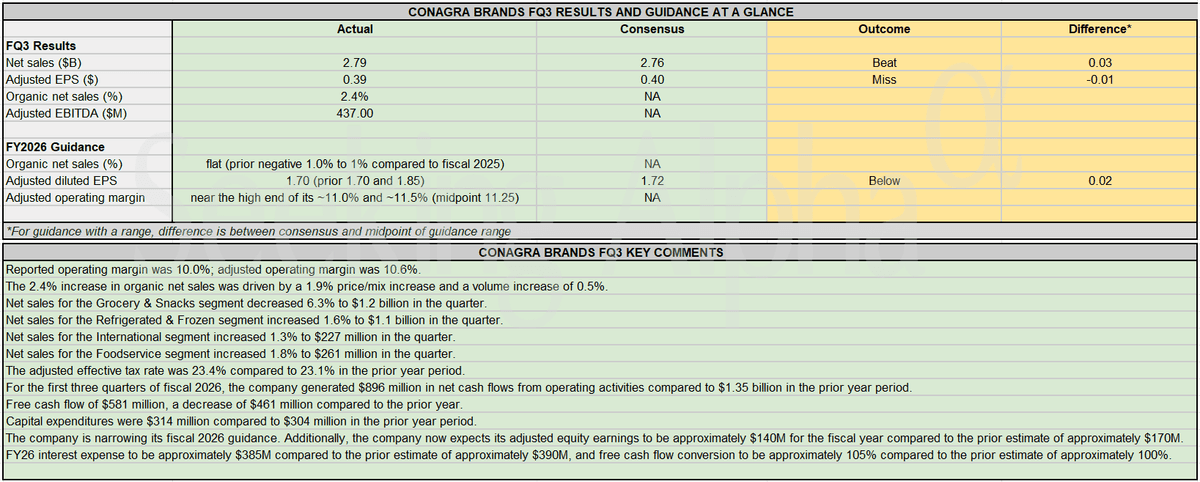
Conagra Q3财报:营收超预期但EPS不及预期
Conagra Brands公布2024财年Q3财报,营收超预期但每股收益低于预期,公司小幅收窄FY26业绩展望,股价承压。
AI浪潮下的华尔街投资机遇:Nvidia产业链全景解析与美股布局
深度解析AI芯片龙头Nvidia产业链崛起对美股板块格局的深远影响,全面探讨产业链上下游投资机会与风险,为投资者提供参考。

美联储官员放鹰美股承压回调 科技股估值面临调整
美联储官员密集释放鹰派信号,三大股指集体承压回调。科技股普遍承压,纳斯达克指数跌幅明显。分析短期调整性质及科技股估值风险,后市关注通胀数据与政策走向。

NVDA财报超预期点燃AI芯片股 纳斯达克指数创新高
英伟达财报业绩超预期,数据中心业务强劲增长,AI芯片板块集体走强,纳斯达克指数受科技股带动创新高,市场展望分析
