Crypto exchanges face a survival crisis as day traders disappear
New regulations and a massive drop in day traders are pushing regional platforms into bankruptcy, leaving only the biggest giants standing.
YayaNews contributes financial news and market context through the YayaNews editorial workflow.

New regulations and a massive drop in day traders are pushing regional platforms into bankruptcy, leaving only the biggest giants standing.
Crypto exchanges face a survival crisis as day traders disappear
Finance
BitMEX and BitMart may be first casualties of crypto trading slump
Trading volumes across major centralized platforms fell down to $1.05 trillion, marking the quietest stretch of activity for the digital asset market in over two years.
By
Olivier Acuna
|
Edited by
Jamie Crawley
Jul 28, 2026, 9:36 a.m.
4
min read
Make
preferred on
Share
Share this article
Copy link
X icon
X (Twitter)
Make
preferred on
(Tim Mossholder/Unsplash)
Summary
Show
BitMEX, a pioneering crypto derivatives exchange known for inventing the perpetual swap, will permanently shut down in September after years of regulatory and legal troubles.
A wave of closures and bankruptcies, including BitMart, Movement Labs and Storj Labs, underscores how collapsing retail trading volumes and rising regulatory costs are squeezing smaller crypto firms.
Analysts say only large, well-capitalized exchanges with strong compliance, transparent reserves and diversified services are likely to survive as retail speculation fades and rules like the EU’s MiCA take hold.
The early freewheeling era of crypto trading took a final blow as BitMEX announced it
would permanently shut down its operations in September
. The platform, famous for inventing the perpetual swap in 2016, may not be the last.
At least three other crypto firms have announced closures or bankruptcies in the past week, including Bitmart, which let its
users know they have 30 days to close trades and six months to withdraw all their funds
from the platform. Users have raised concerns about withdrawal delays following the announcement. BitMart did not specify why it was closing.
Analysts say exchanges can no longer survive on retail hype alone; they need institutional compliance, clear proof of reserves, and cross-asset trading to stay alive. Jason Fernandes, co-founder of AdLunam, says he believes it all boils down to a steep fall in retail trading.
“There isn't enough volume or retail trading anymore,” said Fernandes, who is also a crypto market and blockchain investment analyst. “Retail interest even in Telegram groups has dropped significantly.”
"We are going to see a lot more of these closures announcements. I think the only exchanges that will survive are those not dependent on retail trading to be successful. In the short term, I don't see a return for retail trading in the numbers we used to see in 2021."
Trading volume falling
Crypto’s centralized exchanges are experiencing their quietest stretch in over two years.
,
Spot trading volume across major centralized venues fell to $1.05 trillion by April 2026, its lowest monthly total in 25 months, according to the
CoinDesk Data Exchange Review
. For context, that represents a steep plunge from the historical monthly activity recorded during peak market cycles. Colin Wu of Wu Blockchain recently revealed that in South Korea,
trading volume at the top five crypto exchanges had dropped 88%
.
But it’s not just crypto exchanges. Movement Labs and Storj Labs filed for Chapter ll bankruptcy,
marking the third
and
fourth crypto-related
company failure, respectively, in seven days as investor capital shifts heavily toward artificial intelligence.
The unexpected closures highlight a potential new reality for the industry. Retail speculation and interest have weakened, and platforms carrying historical regulatory baggage can no longer afford to continue operating. For years, platforms like BitMEX relied purely on company reputation and the high-leverage gambling habits of day traders. New regulatory regimes, such as the European Union’s (EU) Markets in Crypto-Assets Regulation (MiCA) rules, are making smaller, regional venues too expensive to run.
"The fact that BitMEX shuts down isn’t a surprise," said market analyst Michael Van De Poppe, a prominent Dutch crypto analyst, trader, and entrepreneur who serves as the founder and Chief Investment Officer (CIO) of MN Capital and MN Fund.
"Only big exchanges are able to comply with all the regulatory frameworks, and smaller exchanges have two options: leave or get taken over,” he said. “The retail speculation and gambling period is likely behind us."
Erald Ghoos, CEO of OKX Europe, estimated only about 80% of the more than 3,000 virtual asset services providers (VASPs) in the EU would survive MiCA. “It's not only because of MiCA itself, it's because of the whole width and heaviness of the European regulatory burden,” he
said in an interview.
Traders left BitMEX years ago after the company
faced enforcement actions from the U.S. Commodity Futures Trading Commission (CFTC)
and the Department of Justice. The drop in volume left the platform more exposed to shifts in market conditions. BitMEX was
reportedly ordered to pay $100 million
in fines for violating bank secrecy rules. However, a couple years later, President Donald Trump
pardoned BitMEX
, although they apparently faced immense issues recovering from years of litigation.
BitMEX is now
facing legal action alleging it withheld trader collateral and engaged in insider trading
. The new lawsuit accuses Hayes and fellow co-founders, Ben Delo and Samuel Reed, of designing a system to retain customers’ collateral and transfer the remaining bitcoin to the platform’s insurance fund.
"One lawsuit won't move the market, but allegations involving 622 BTC (worth over $40.5 million) of withheld collateral reinforce the oldest doubt in crypto: your funds are safe until the day they aren't," said Samuel Videau, chief technology officer at Genius. "What's ending is opacity,the model where you wire assets to a black box and take the operator's word for it."
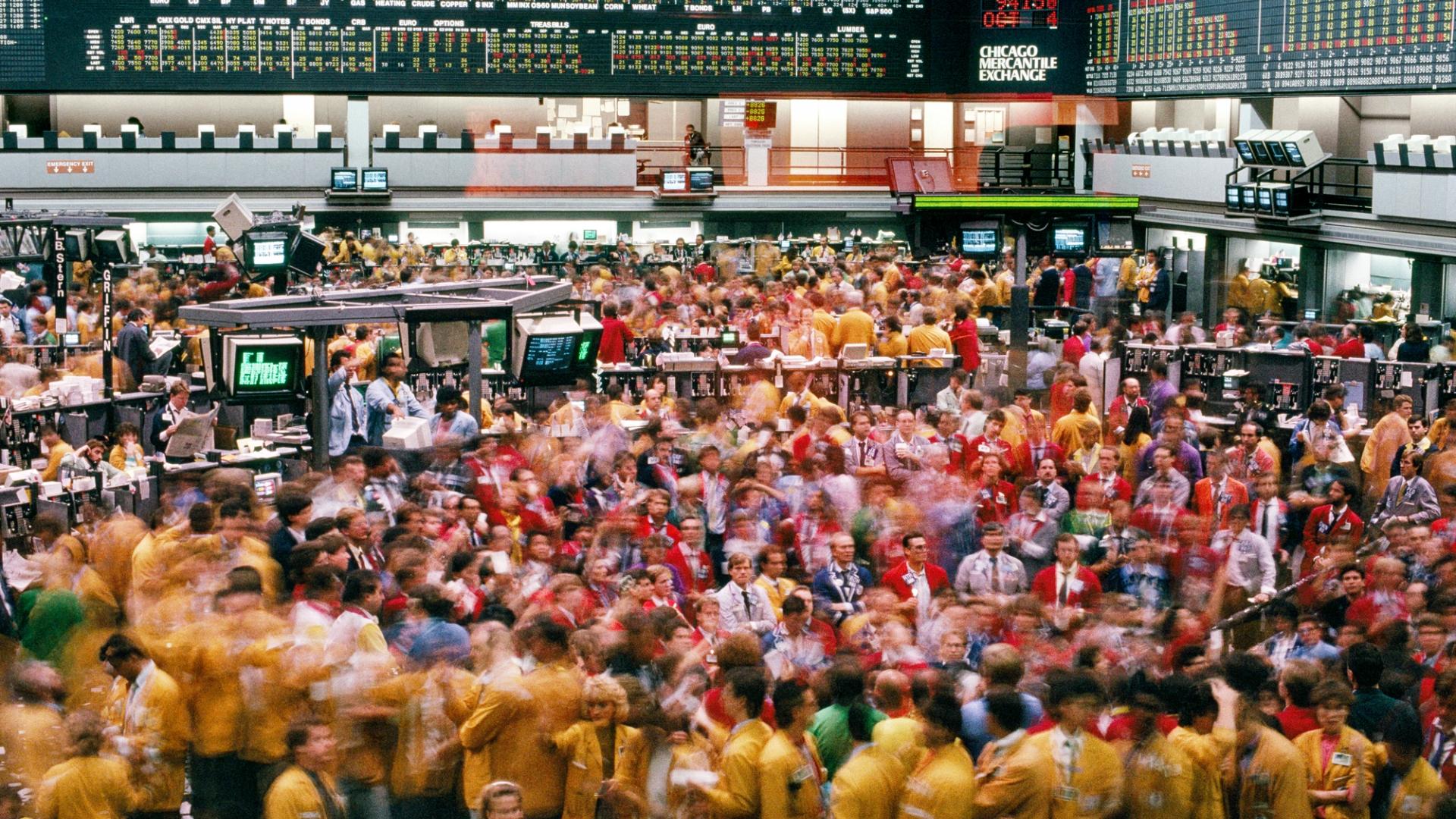
The overall crypto derivatives market has barely flinched. The perpetual swap product BitMEX built now generates the bulk of trading activity on larger exchanges like Binance and OKX, alongside traditional platforms like the Chicago Mercantile Exchange (CME).
"The derivatives market is now much larger and more diversified," said Edwin Cheung, executive director at crypto trading platform Gate. "Most displaced volume is likely to be absorbed by other established platforms."
The shift suggests exchanges now need scale, regulatory compliance and broader services to survive, rather than relying on retail trading alone.
Crypto Trading
Latest Crypto News
1
Apple kept fake bitcoin wallet on App Store after $875,000 theft report, lawsuit alleges
20 minutes ago
2
Bitcoin’s recent stability hasn't been enough to spark a broader altcoin rally
42 minutes ago
3
Bitcoin drops as South Korean stocks tumble, Senate shelves crypto Clarity Act
1 hour ago
4
1inch opens Aqua liquidity protocol across 13 chains
1 hour ago
5
Perpetuals tied to SK Hynix hit by flash crash to $900 on Hyperliquid
2 hours ago
6
Inside the CME and CFTC’s battle over onchain perpetual futures
4 hours ago
7
Hong Kong’s central bank puts a number on lenders' quantum preparedness. It's very low.
4 hours ago
8
Live updates: Bitcoin falls back to $63,000 as South Korea's Kospi crashes nearly 11%
4 hours ago
9
Bitcoin slides 2% after U.S. close while Korea’s Kospi plunges 10%
7 hours ago
10
U.S. Senate puts off crypto Clarity Act for now as it focuses limited bandwidth elsewhere
12 hours ago
Latest Research
Crypto Flows, Share and the Selective Rotation
Crypto Flows, Share and the Selective Rotation
Markets repositioned since June, but Binance held share (~55% user funds, ~24% spot) and drew net inflows in early July while the tracked market saw outflows.
By
CoinDesk Research
Jul 22, 2026
Markets repositioned since June, but Binance held share (~55% user funds, ~24% spot) and drew net inflows in early July while the tracked market saw outflows.
Why it matters
:
Markets repositioned since June, but Binance held share (~55% user funds, ~24% spot) and drew net inflows in early July while the tracked market saw outflows.
View Full Report
More From
Finance
Apple kept fake bitcoin wallet on App Store after $875,000 theft report, lawsuit alleges
Digital asset trading platform Uphold cuts 17% of global headcount as crypto winter bites
What are perps, anyway? Everything you need to know about crypto’s hottest trading instrument
Crypto
CD20
$1,718.72
CD20 down 3.18 percent
3.18%
BTC
$63,375.48
BTC down 2.57 percent
2.57%
ETH
$1,876.13
ETH down 4.09 percent
4.09%
XRP
$1.05
XRP down 4.91 percent
4.91%
SOL
$73.14
SOL down 4.75 percent
4.75%
Original YayaNews editorial coverage, published for informational purposes.
This article is sourced from CoinDesk. It is for informational purposes only and does not constitute investment advice.
Topics & Symbols
Continue Reading
Related Reading
Police complain that Binance is making it harder to track crypto scammers: NYT
Prosecutors warn that the exchange's new rules drag out the time it takes to freeze stolen assets, giving cybercriminals a massive head start.

1inch opens Aqua liquidity protocol across 13 chains
Liquidity providers can keep assets in their own wallets, using one balance to back multiple positions without splitting capital across different pools.

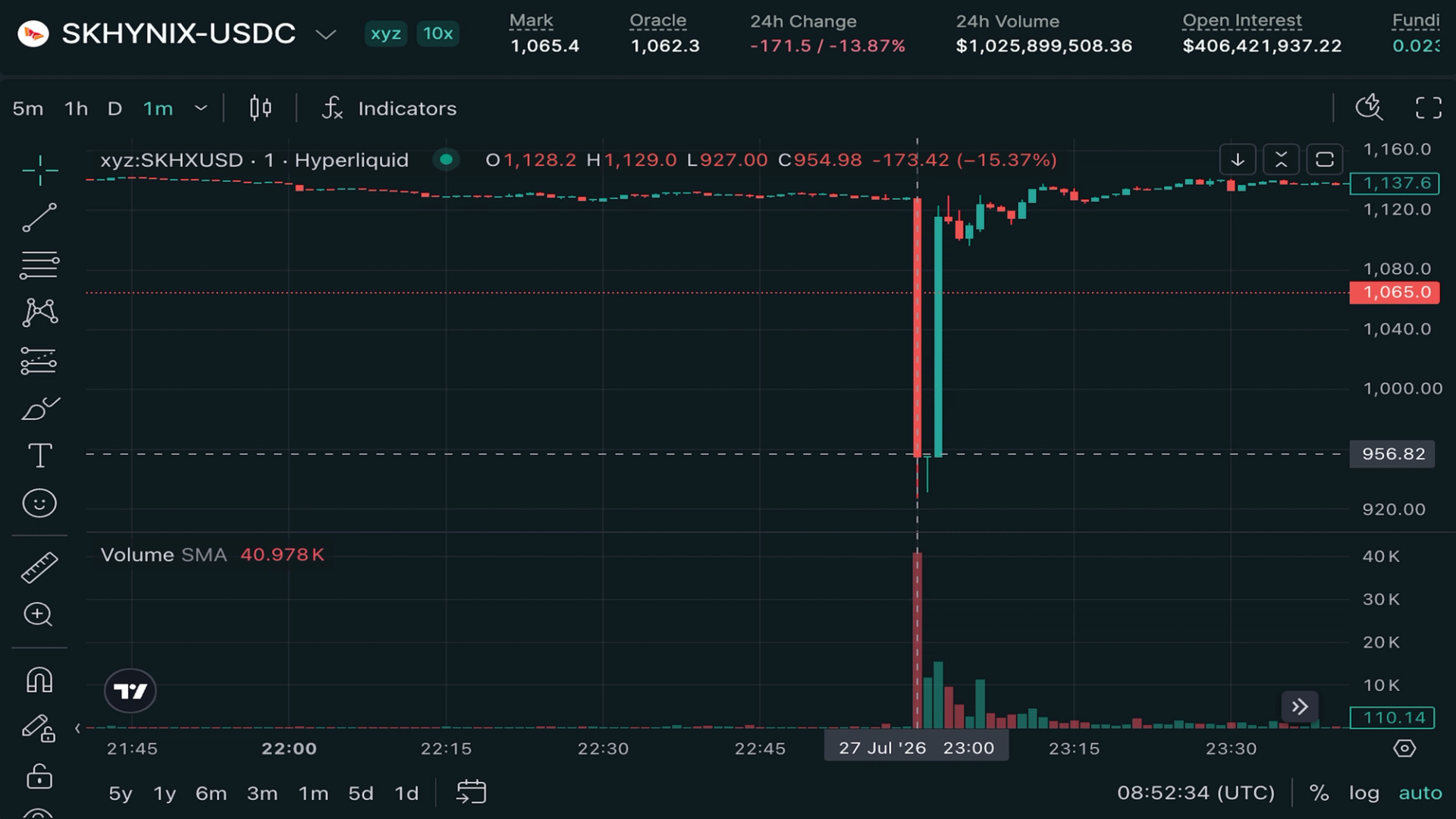
SK Hynix perps suffer flash crash to $900 on Hyperliquid
Perpetual futures on the South Korean chipmaker's American depositary receipts plunged 20% in one minute before quickly rebounding above $1,000.
Inside the CME and CFTC’s battle over onchain perpetual futures
Weeks ago, the U.S. CFTC opened the gates for crypto perps with its first listing approval, but major derivatives player CME is fighting back against what it sees as a diversion from the law.