Is Clarity's delay a blessing in disguise?: State of Crypto
The crypto industry is angry and disappointed that the Senate is not holding a procedural vote on the Clarity Act this month, but that isn't the worst possible outcome.
YayaNews contributes financial news and market context through the YayaNews editorial workflow.
The crypto industry is angry and disappointed that the Senate is not holding a procedural vote on the Clarity Act this month, but that isn't the worst possible outcome.
Is Clarity's delay a blessing in disguise?: State of Crypto
Policy
Is Clarity's delay a blessing in disguise?: State of Crypto
The crypto industry is angry and disappointed that the Senate is not holding a procedural vote on the Clarity Act this month, but that isn't the worst possible outcome.
By
Nikhilesh De
|
Edited by
Stephen Alpher
29 min ago
5
min read
Make
preferred on
Share
Share this article
Copy link
X icon
X (Twitter)
Make
preferred on
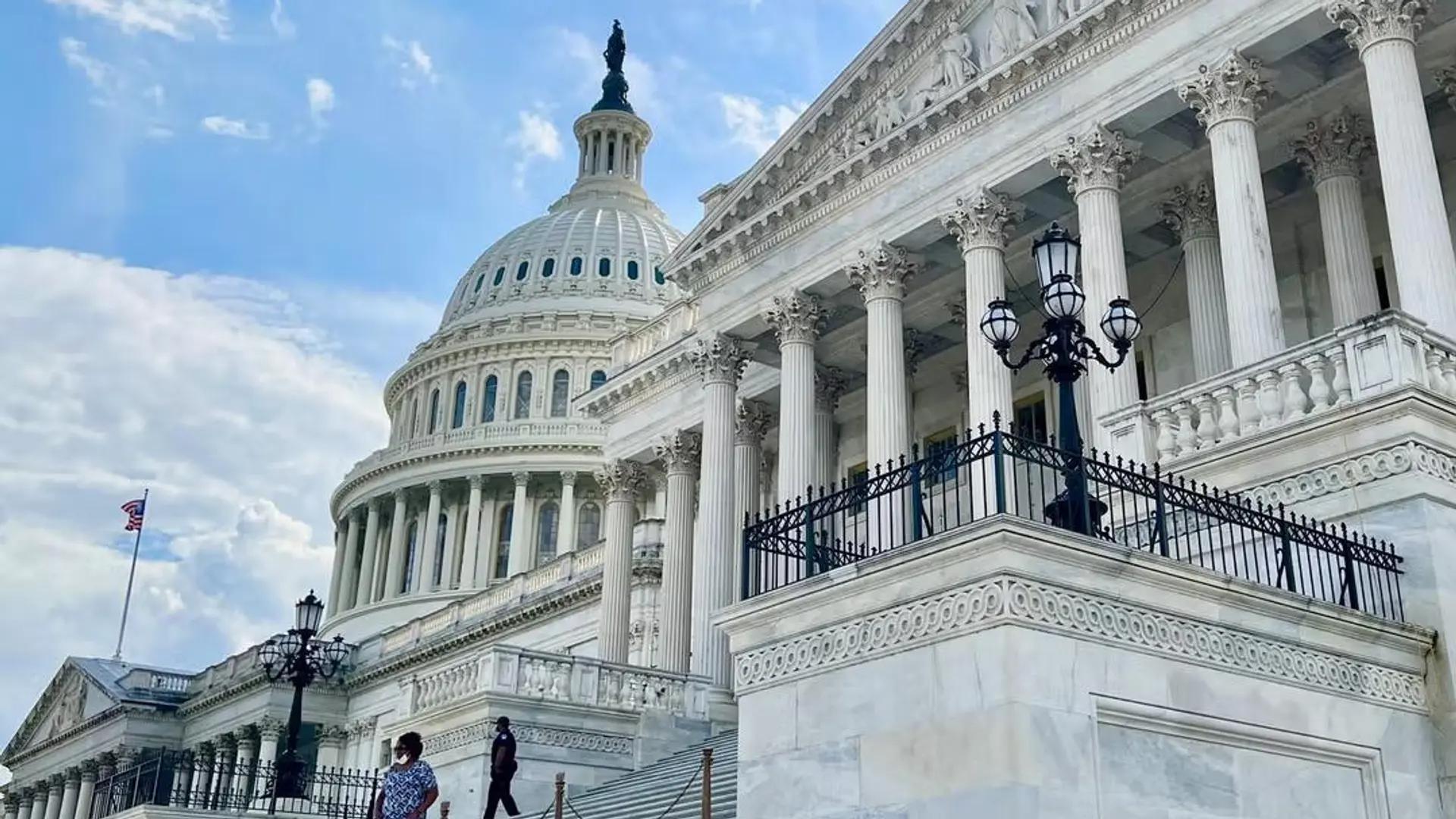
U.S. Capitol Building (Jesse Hamilton/CoinDesk)
Senate Majority Leader John announced late last Thursday that the Senate would not hold even a procedural vote on the Digital Asset Market Clarity Act before the August recess, dimming the chances that the bill can become law this year. But the chances of a successful vote were already slim, and this delay at least gives lawmakers more time to sort out their outstanding issues.
You’re reading State of Crypto, a CoinDesk newsletter looking at the intersection of cryptocurrency and government.
Click here
to sign up for future editions.
Judgement deferred
The narrative
The Digital Asset Market Clarity Act will not make it through any Senate procedural votes in August. It's an open question whether it will make it through the Senate when lawmakers return in mid-September. But it seems clear that the bill would not have made much progress if a vote had been held.
Why it matters
While the crypto industry wanted a vote on the Clarity Act, it would probably be better for the industry if that vote were successful. If the bill had failed a cloture vote last week, it may well have just ended the process until the next Congress. And it is unclear whether the Senate would have voted to advance Clarity before the August recess, given ongoing concerns about President Donald Trump's crypto business ties, renewed debates about stablecoin yields and rewards and other outstanding issues being negotiated.
Breaking it down
There is a lot to unpack about the crypto industry's failed push to hold a vote on the Clarity Act this month. According to numerous legislative aides and industry sources, the sheer number of unresolved issues posed an almost insurmountable wall for even a successful procedural vote, and it became increasingly clear over the course of the week that it would be difficult to even hold that vote.
The biggest issue, as CoinDesk and other news outlets have reported for
months
now, is ethics. President Donald Trump's crypto business ties have alarmed Democrats for over a year, with lawmakers expressing concerns as far back
as May 2025
during the negotiations on the Guiding and Establishing National Innovation for U.S. Stablecoins Act (GENIUS Act). Trump's reporting of $1.4 billion in profit provided a concrete representation of those concerns, with a source familiar describing it as the "kill shot" for negotiations on Friday.
But there are other outstanding issues. Law enforcement provisions are still being debated, some agriculture-related issues are being worked out, and recently, a growing number of lawmakers have expressed concerns about stablecoin yield and rewards.
These issues mean that if a vote were held, it very well may have failed. The GENIUS Act fell short in a vote before it passed the Senate as well, so it's not as if a failed motion to proceed or initial cloture vote would spell the end of Clarity. The timing, however — three months out from an election and just as lawmakers prepare to break for over a month — would have severely harmed the bill's ultimate chances of passage.
What those chances look like now depends on who you ask. Senator Angela Alsobrook said in a statement shared with CoinDesk that the goal remains to get the bill passed.
"We've worked for over a year on a bipartisan basis to protect consumers, limit deposit flight, fight illicit finance and include a fair deal on ethics," she said in the statement. "We will continue our work — getting Clarity Act right remains our goal."
Senator Cynthia Lummis similarly said in
a statement posted online
that "we've come too far to quit now."
"I will not give up because I believe to my core that this industry deserves to thrive with clear rules of the road on U.S. soil, that consumers deserve to be protected from scams and have the confidence to participate in our digital economy, and that law enforcement deserves the tools they need to hold bad actors accountable," she said.
But industry participants are more split on the bill's odds of passage. One person following the bill said it would be difficult to convince enough Democrats to vote for the bill for a variety of reasons, ranging from the likelihood that they'll flip at least one chamber of Congress in the November election to the aforementioned ethics concerns. The White House would have to agree to a substantive change to the ethics language because Democrats who would otherwise vote for the bill are unlikely to blink at this stage, the person said.
A Senate staffer similarly told CoinDesk that a "legitimate" deal would be needed to get Democratic votes for the bill.
There was talk that a vote would at least get lawmakers on the record on Clarity, as
Semafor reported
last month, which could shape how Fairshake and other crypto political action committees spend their funds in the final weeks of the election season. A source familiar with the matter laid the blame for the lack of a vote on Democrats, telling CoinDesk on Thursday night that a vote would have alienated the crypto industry and driven campaign dollars away from them.
But the other staffer said the fact that Republicans are also now coming out with concerns about the bill, even as Democrats like Alsobrooks and Ruben Gallego continue negotiating, suggests that the blame cannot be laid at either major party.
Senator Thom Tillis
told Politico
that "the odds drop precipitously" on Friday, citing the election as well, alongside the lengthy break.
But two of the people who spoke to CoinDesk said the bill has a legitimate shot at passage, especially given the August deadline was more of what the crypto industry hoped for than a hard-and-fast rule.
As has been the case, what that shot looks like will depend on what the Senate can negotiate in the next five weeks.
This week
This week
We're taking a breather, maybe.
If you’ve got thoughts or questions on what I should discuss next week or any other feedback you’d like to share, feel free to email me at
or find me on Bluesky
@nikhileshde.bsky.social
.
You can also join the group conversation on
Telegram
.
See ya’ll next week!
Newsletters
State of Crypto
Latest Crypto News
1
Hyperliquid’s RWA perps boom is eating into the revenue that backs HYPE
3 hrs ago
2
Bitcoin investors pour $853 million into spot ETFs. BlackRock’s IBIT claims the bulk
4 hrs ago
3
Crypto is going through a massive dot-com style shakeout as over 100 projects fold in 2026
5 hrs ago
4
Controversial Bitcoin fork BIP-110 mines two blocks, then stops
13 hrs ago
5
Bitcoin hits block 961,632 as the controversial BIP-110 soft fork attempt begins
22 hrs ago
6
Hardware wallet sales in Russia more than double as new crypto rules near
1 day ago
7
Brazil's central bank orders exchanges to delay large crypto transfers abroad
1 day ago
8
Trillions in institutional money to flow into bitcoin, says Bitwise's Matt Hougan
1 day ago
9
Why trillion-dollar asset manager T. Rowe Price put memecoins in its crypto ETF
1 day ago
10
U.S. Senate opens first stage of crypto Clarity Act voting to give bill a chance next month
1 day ago
Latest Research
Building the Zcash Machine: Tachyon and Quantum Readiness
Building the Zcash Machine: Tachyon and Quantum Readiness
Zcash’s Tachyon upgrade aims to scale shielded payments, improve quantum readiness, and test whether its funding, security, and governance can hold.
By
CoinDesk Research
Jun 30, 2026
Commissioned by
GenZcash
Zcash’s Tachyon upgrade aims to scale shielded payments, improve quantum readiness, and test whether its funding, security, and governance can hold.
Why it matters
:
Zcash’s Tachyon upgrade aims to scale shielded payments, improve quantum readiness, and test whether its funding, security, and governance can hold.
View Full Report
More From
Policy
U.S. Senate opens first stage of crypto Clarity Act voting to give bill a chance next month
U.S. widens Iran crypto crackdown with sanctions on two exchanges
Bybit sues North Korea and Lazarus Group over $1.5 billion hack, secures asset freeze
Crypto
CD20
$1,774.43
CD20 up 0.23 percent
0.23%
BTC
$65,147.22
BTC up 0.23 percent
0.23%
ETH
$1,920.21
ETH up 0.0010 percent
0.0010%
XRP
$1.04
XRP down 0.26 percent
0.26%
SOL
$77.13
SOL up 1.40 percent
1.40%
Original YayaNews editorial coverage, published for informational purposes.
This article is sourced from CoinDesk. It is for informational purposes only and does not constitute investment advice.
Topics & Symbols
Continue Reading
Related Reading
Upbit Lists PROM with KRW and USDT Trading Pairs, Opening New Opportunities for Mid-Cap Tokens
Upbit announced the addition of PROM KRW and USDT trading pairs, with a market cap of approximately $43.5 million. This article analyzes the significance, project background, and market impact for investors.

SEC Prepares Major Crypto Plan as Clarity Act Stalls: What It Means for Markets
As the Clarity Act remains gridlocked, the SEC is reportedly preparing a significant crypto regulatory plan. This article analyzes potential new rules covering DeFi, stablecoins, and exchanges, market reactions, and the global competitive pressures shaping U.S. oversight.

Binance Launches DOSUSDT Perpetual Contract: Market Impact and Investment Strategy Analysis
Binance announced the listing of the USDⓈ-M DOSUSDT perpetual contract on August 11, 2026. This article analyzes the announcement background, market reactions, and investment risks to help investors seize opportunities.
Ireland Plans Industry Standards for Illicit Crypto Use
The strategy prepared by the Irish government’s finance department included industry standards on crypto used for gambling and strengthening AML/CFT measures in certain cases.