Quantum computing nears commercial breakthrough, IBM CEO says
Arvind Krishna said quantum computing will begin generating meaningful revenue before the decade ends as investment in the sector accelerates, in an interview on CNBC.
YayaNews contributes financial news and market context through the YayaNews editorial workflow.
Quantum computing nears commercial breakthrough, IBM CEO says
Markets
Quantum computing nears commercial breakthrough, IBM CEO says
Arvind Krishna said quantum computing will begin generating meaningful revenue before the decade ends as investment in the sector accelerates, in an interview on CNBC.
By
Helene Braun
|
Edited by
Sheldon Reback
Updated
Jul 31, 2026, 4:50 p.m.
Published
Jul 31, 2026, 3:39 p.m.
2
min read
Make
preferred on
Share
Share this article
Copy link
X icon
X (Twitter)
Make
preferred on
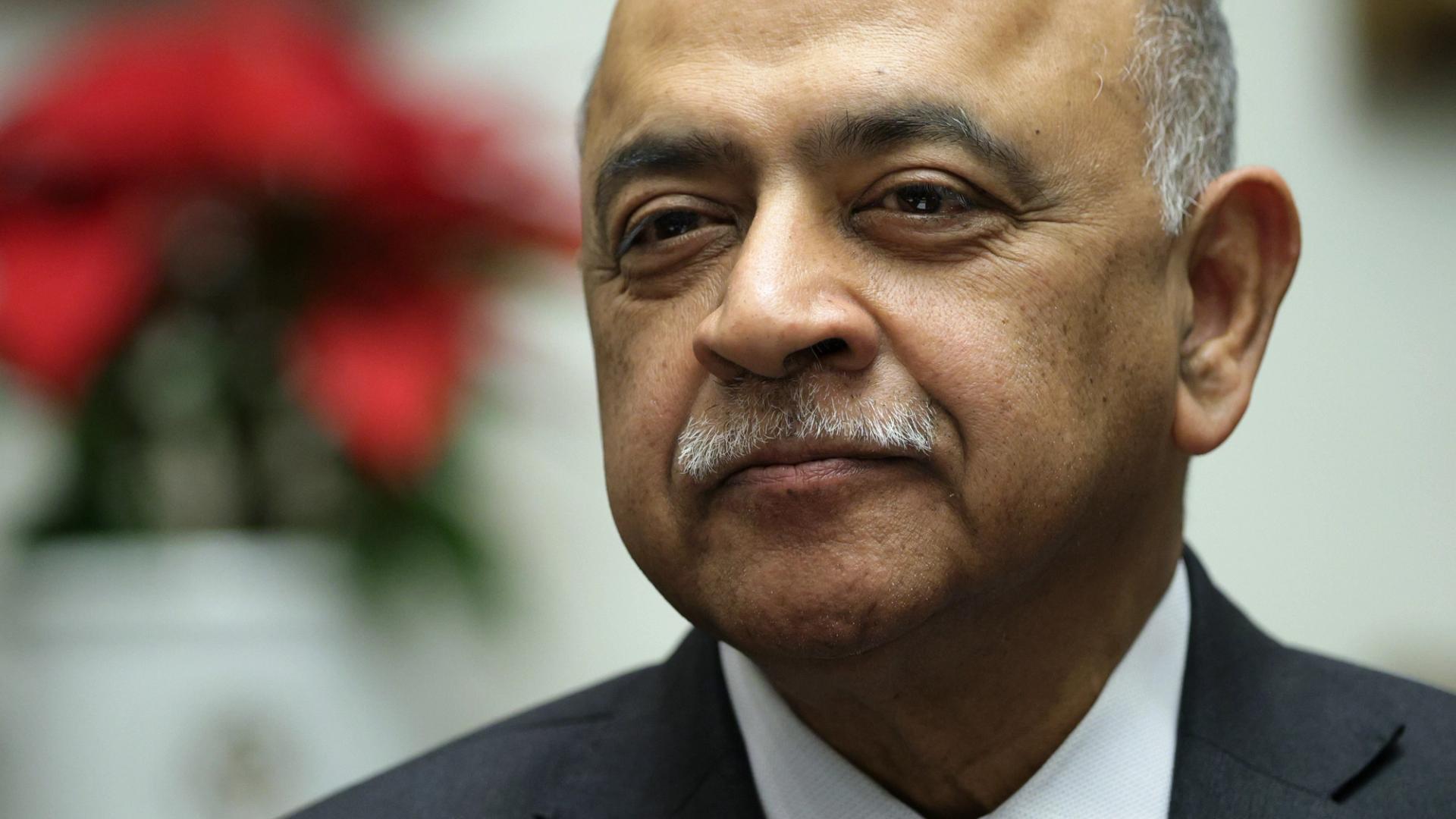
IBM CEO Arvind Krishna (Alex Wong/Getty Images)
Summary
Show
IBM expects quantum computing to contribute to revenue and profit by 2028 or 2029, CEO Arvind Krishna said.
Companies including Alphabet, IonQ and Rigetti are racing to commercialize the technology.
Bitcoin miners and the crypto industry are watching quantum's infrastructure needs and long-term security implications.
Quantum computing may be approaching its biggest milestone yet: generating meaningful commercial revenue, according to IBM CEO Arvind Krishna, who said the technology is close to becoming a business rather than simply a long-term research project.
Speaking on
CNBC's Mad Money
on Thursday, Krishna said he expects the sector to begin making a measurable contribution to IBM's revenue and profit by 2028 or 2029.
"By the end of the 2030s, we are now pretty convinced this is a trillion dollars of value," Krishna said, describing what he sees as the long-term economic potential of quantum computing.
His comments come as competition intensifies among companies developing hardware and software that exploit the principles of quantum mechanics to solve mathematical problems in seconds that would take conventional computers thousands of years.
"A quantum computer can do things better, faster, cheaper, in a way that normal classical computers cannot do at this time," Krishna said.
IBM, Alphabet, IonQ, Rigetti Computing and several startups are racing to build machines capable of solving problems that remain impractical for today's most powerful classical computers.
Unlike AI, which has driven a surge in demand for graphics processors to train and run large language models, quantum computing targets a different class of challenges. Researchers say the technology could accelerate molecular simulations, optimize complex logistics networks, advance materials science and improve cryptography.
Krishna said IBM has already demonstrated some of that potential, using quantum computers to uncover properties of materials that conventional computers had been unable to model. Those insights could eventually contribute to longer-lasting batteries, new materials, fusion energy research and drug discovery.
Growing confidence around commercialization has been matched by rising investment. In May, IBM announced plans for a standalone quantum chip foundry backed by a $1 billion commitment from the U.S. Department of Commerce through the CHIPS incentive program, alongside a matching $1 billion investment from the company. Other developers have also expanded manufacturing capacity and research partnerships as they push toward fault-tolerant quantum computers.
The industry's progress is also drawing attention from the digital asset sector. Several publicly traded bitcoin
BTC
$
62,780.67
miners, including MARA Holdings (MARA), Riot Platforms (RIOT) and CleanSpark (CLSP), have diversified into AI and high-performance computing, leveraging their data centers and power infrastructure for new computing workloads.
Quantum computers won't simply slot into today's AI data centers. They require entirely different hardware and operating environments, meaning the industry will need new facilities and supply chains as the technology matures.
The technology has also drawn attention in the crypto world. Some believe a sufficiently advanced quantum computer could one day crack the encryption that protects Bitcoin wallets and other blockchain networks.
Most experts, however, say that scenario is still a long way off and developers are already working on quantum-resistant cryptography. Many researchers say blockchain networks will have time to upgrade well before quantum machines become powerful enough to pose a real threat.
quantum computing
Related Assets
Bitcoin
$
62,799.46
3.01
%
Latest Crypto News
1
Crypto faces 3 barriers to next bull run, STS Digital CEO says
1 hour ago
2
Circle secures New York trust charter as crypto regulatory push accelerates
3 hours ago
3
Coinbase's weak quarter leaves Wall Street split on timing of a recovery
3 hours ago
4
RWA perps will outpace tokenization
3 hours ago
5
Dubai-based crypto exchange tied to $4 billion Iran sanctioned-evasion network
4 hours ago
6
World Cup bets smash records as prediction markets hit $20 billion in volume
4 hours ago
7
U.S. sanctions Iran-linked bitcoin insurance scheme for Strait of Hormuz ships
4 hours ago
8
Traders brace for an August crypto pull-back as protection against $60,000 bitcoin dip becomes top trade
5 hours ago
9
Bitcoin, ether fall, equities rally with broader crypto market on track for best month in a year
5 hours ago
10
New York sues Kalshi, alleges it offers a gambling platform 'plain and simple'
7 hours ago
Latest Research
The Evolution of the Crypto CEX Landscape: A Case Study on Binance
The Evolution of the Crypto CEX Landscape: A Case Study on Binance
Binance remains crypto’s leading exchange, expanding from spot and derivatives into RWAs, payments, savings, yield, and broader financial services.
By
CoinDesk Research
Jun 29, 2026
Commissioned by
Binance
Binance remains crypto’s leading exchange, expanding from spot and derivatives into RWAs, payments, savings, yield, and broader financial services.
Why it matters
:
Binance remains crypto’s leading exchange, expanding from spot and derivatives into RWAs, payments, savings, yield, and broader financial services.
View Full Report
More From
Markets
Crypto faces 3 barriers to next bull run, STS Digital CEO says
Coinbase's weak quarter leaves Wall Street split on timing of a recovery
World Cup bets smash records as prediction markets hit $20 billion in volume
More From
Bitcoin
Crypto faces 3 barriers to next bull run, STS Digital CEO says
Circle secures New York trust charter as crypto regulatory push accelerates
Coinbase's weak quarter leaves Wall Street split on timing of a recovery
Crypto
CD20
$1,725.25
CD20 down 2.46 percent
2.46%
BTC
$62,800.72
BTC down 3.01 percent
3.01%
ETH
$1,862.24
ETH down 2.87 percent
2.87%
XRP
$1.06
XRP down 2.47 percent
2.47%
SOL
$73.24
SOL down 1.69 percent
1.69%
Original YayaNews editorial coverage, published for informational purposes.
This article is sourced from CoinDesk. It is for informational purposes only and does not constitute investment advice.
Topics & Symbols
Continue Reading
Related Reading
Upbit Lists PROM with KRW and USDT Trading Pairs, Opening New Opportunities for Mid-Cap Tokens
Upbit announced the addition of PROM KRW and USDT trading pairs, with a market cap of approximately $43.5 million. This article analyzes the significance, project background, and market impact for investors.

SEC Prepares Major Crypto Plan as Clarity Act Stalls: What It Means for Markets
As the Clarity Act remains gridlocked, the SEC is reportedly preparing a significant crypto regulatory plan. This article analyzes potential new rules covering DeFi, stablecoins, and exchanges, market reactions, and the global competitive pressures shaping U.S. oversight.

Binance Launches DOSUSDT Perpetual Contract: Market Impact and Investment Strategy Analysis
Binance announced the listing of the USDⓈ-M DOSUSDT perpetual contract on August 11, 2026. This article analyzes the announcement background, market reactions, and investment risks to help investors seize opportunities.
Ireland Plans Industry Standards for Illicit Crypto Use
The strategy prepared by the Irish government’s finance department included industry standards on crypto used for gambling and strengthening AML/CFT measures in certain cases.