Why Visa, Mastercard and Coinbase aren't abandoning USDC stablecoin for Open USD
Executives at Coinbase, Visa and Mastercard said they plan to support multiple stablecoins, suggesting Open USD is another payments rail rather than a direct replacement for USDC.
YayaNews contributes financial news and market context through the YayaNews editorial workflow.
Why Visa, Mastercard and Coinbase aren't abandoning USDC stablecoin for Open USD
Finance
Open USD rattled Circle's stock, but its key backers still support USDC
Executives at Coinbase, Visa and Mastercard said they plan to support multiple stablecoins, suggesting Open USD is another payments rail rather than a direct replacement for USDC.
By
Krisztian Sandor
|
Edited by
Nikhilesh De
Aug 4, 2026, 5:55 p.m.
4
min read
Make
preferred on
Share
Share this article
Copy link
X icon
X (Twitter)
Make
preferred on
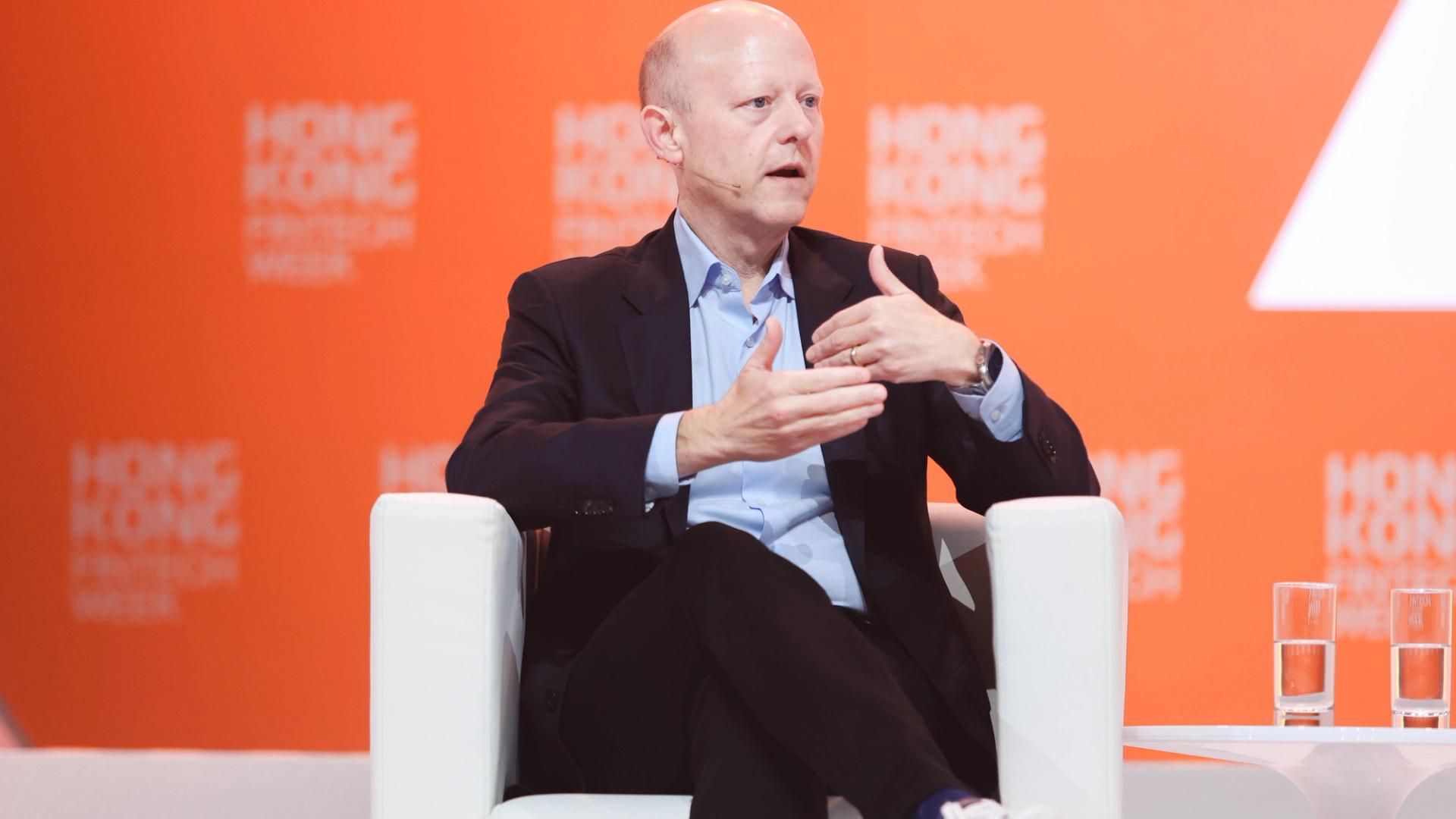
Jeremy Allaire, cofounder, chairman and CEO of Circle speaks at Hong Kong Fintech Week in 2024. (HK Fintech Week)
Summary
Show
The launch of Open USD, backed by Coinbase, Visa and Mastercard, initially sparked fears of a direct challenge to Circle’s USDC and wiped billions from Circle’s market value.
Executives at Coinbase, Visa and Mastercard now say they are pursuing a multi-stablecoin, multi-chain strategy, positioning Open USD as an additional network rather than a replacement for USDC.
Analysts say many Open USD partners have made only light commitments and that execution and existing liquidity in USDC and USDT will matter more than the size of Open USD’s consortium.
When Open Standard
announced
Open USD a month ago, investors quickly interpreted the backing from Coinbase (COIN), Visa (V) and Mastercard (MA) as a direct challenge to Circle (CRCL) and its $72 billion USDC stablecoin.
The announcement erased billions of dollars from Circle's market value. Shares
fell
as much as 20% — and have yet to recover — as the consortium unveiled more than 140 launch partners, fueling concerns that some of USDC's largest commercial partners were lining up behind a rival digital dollar.
The reaction highlighted a broader shift in the stablecoin market. Once dominated by a handful of crypto-native issuers like Circle, the sector now is drawing banks, payment networks and fintech firms eager to issue or distribute digital dollars as regulation clears the way for wider adoption. With that, the
competitive battle
is increasingly extending beyond issuing tokens to securing the payment rails, exchanges and financial platforms that put them into users' hands.
Recent earnings calls from Open USD's
highest-profile backers
, however, paint a more nuanced picture. Executives at Coinbase, Visa and Mastercard all said they intend to support multiple stablecoins instead of betting on a single winner, describing Open USD as another network to connect to rather than a replacement for USDC.
Multi-coin strategy
During its second-quarter earnings call last week, Coinbase reassured investors about its close relationship with Circle. Chief Financial Officer Alesia Haas said the exchange has already met the conditions to renew its commercial agreement with Circle and will continue growing the USDC ecosystem.
CEO Brian Armstrong also said Coinbase remains a "multi-stablecoin platform" and wants to support whichever stablecoins customers choose to use. The exchange already supports USDC alongside Tether's USDT and PayPal's PYUSD, he said, with Open USD creating "additional business opportunities and revenue opportunities."
Ryan McInerney, CEO of Visa, struck a similar tone during his firm’s earnings call, describing the company as "multi-coin, multi-chain" and saying that Visa's role is to help clients connect to whichever stablecoins gain adoption.
"Our role is not to pick winners," he said.
Notably, Visa offered the first live example of pushing Open USD to customers. The firm last month
launched
its Visa Stablecoin Platform, giving banks, fintechs and payment providers tools to access, store, redeem and move stablecoins, with OUSD serving as the initial supported token.
Mastercard CEO Michael Miebach said the company already supports USDC, Paxos-led Global Dollar Network (USDG) and other stablecoins, describing Open USD as "another coin that we will enable across our network."
"Choice has always been a key criteria and will be the same here in stablecoins," he said.
Miebach described Open USD as a payments-focused utility with shared economics, while acknowledging governance would not involve all 140-plus partners. "Otherwise we wouldn't move anything forward," he said. The firm – and recently acquired BVNK — are also listed as ecosystem members of USDG, another consortium-governed stablecoin project that includes Robinhood among its members.
An Open Standard spokesperson did not comment on the executives remarks and governance behind the project, adding that the firm will share more details at launch later this year.
Support versus commitment
The executives' comments suggest that observers may have read too much into Open USD's kick-off partner list, analysts noted.
"It is becoming increasingly clear that the commitment from OUSD's partners is closer to a soft LOI [letter of intent] than a strategic bet," Lorenzo Valente, director of digital asset research at ARK Invest, wrote on X. "Supporting OUSD is very different from committing meaningful resources, distribution, or balance sheet to making it win."
Amey Dandawate, director at Bluechip Ratings, told CoinDesk that joining the consortium amounts to "a free option" that allows companies to participate if Open USD gains traction without making meaningful upfront commitments.
Others cautioned that execution will be more important than the — otherwise impressive — size of the partner list.
Owen Lau, managing director at Clear Street, said the market overreacted to the initial announcement. USDC and Tether's USDT already benefit from deep liquidity and network effects, he said, making adoption a much bigger challenge than signing up partners.
"It is very difficult to align the interests of so many partners with different incentives and agendas," Lau said. Still, he said the participation of Visa, Mastercard and Coinbase could help accelerate stablecoin use in consumer payments regardless of which token ultimately gains the most traction.
Dragonfly general partner Rob Hadick said the executives reinforced his view that Stripe remains the driving force behind Open USD, while Visa and Mastercard have commercial reasons to remain neutral because they work with competing issuers.
"Their businesses require them to not alienate partners and customers," Hadick told CoinDesk. "They may push OUSD, but they must be open."
Stablecoins
Coinbase
Mastercard
Circle
Latest Crypto News
1
Samsung is poised to become a dominant stablecoin distributor, analysts say
2 hours ago
2
Clarity Act sits idle over Trump ethics question as Warren asks SEC to investigate him
3 hours ago
3
Wells Fargo joins JPMorgan and Citi in the race to tokenize Wall Street’s settlement rails
3 hours ago
4
Bitcoin’s $63,000 zone emerges as key battleground for buyers: Glassnode
4 hours ago
5
Polymarket targets $20 billion valuation as competition heats up in prediction market sector
5 hours ago
6
Intesa Sanpaolo slashed IBIT stake by 94% in 2Q, tripled ether ETF holding as crypto prices slumped
5 hours ago
7
Dinari brings tokenized U.S. stocks to American investors as equity race heats up
5 hours ago
8
As Clarity Act teeters, mystery group hammers away at crypto in Washington ads
6 hours ago
9
BitGo’s WBTC move pushes LayerZero-to-Chainlink tally near $15 billion
6 hours ago
10
BNY to add crypto staking to digital asset custody platform
7 hours ago
Latest Research
The Evolution of the Crypto CEX Landscape: A Case Study on Binance
The Evolution of the Crypto CEX Landscape: A Case Study on Binance
Binance remains crypto’s leading exchange, expanding from spot and derivatives into RWAs, payments, savings, yield, and broader financial services.
By
CoinDesk Research
Jun 29, 2026
Commissioned by
Binance
Binance remains crypto’s leading exchange, expanding from spot and derivatives into RWAs, payments, savings, yield, and broader financial services.
Why it matters
:
Binance remains crypto’s leading exchange, expanding from spot and derivatives into RWAs, payments, savings, yield, and broader financial services.
View Full Report
More From
Finance
Samsung is poised to become a dominant stablecoin distributor, analysts say
Wells Fargo joins JPMorgan and Citi in the race to tokenize Wall Street’s settlement rails
Intesa Sanpaolo slashed IBIT stake by 94% in 2Q, tripled ether ETF holding as crypto prices slumped
Crypto
CD20
$1,754.84
CD20 up 0.29 percent
0.29%
BTC
$64,328.71
BTC up 0.82 percent
0.82%
ETH
$1,878.69
ETH up 0.56 percent
0.56%
XRP
$1.08
XRP up 0.052 percent
0.052%
SOL
$74.22
SOL up 0.36 percent
0.36%
Original YayaNews editorial coverage, published for informational purposes.
This article is sourced from CoinDesk. It is for informational purposes only and does not constitute investment advice.
Topics & Symbols
Continue Reading
Related Reading
Upbit Lists PROM with KRW and USDT Trading Pairs, Opening New Opportunities for Mid-Cap Tokens
Upbit announced the addition of PROM KRW and USDT trading pairs, with a market cap of approximately $43.5 million. This article analyzes the significance, project background, and market impact for investors.

SEC Prepares Major Crypto Plan as Clarity Act Stalls: What It Means for Markets
As the Clarity Act remains gridlocked, the SEC is reportedly preparing a significant crypto regulatory plan. This article analyzes potential new rules covering DeFi, stablecoins, and exchanges, market reactions, and the global competitive pressures shaping U.S. oversight.

Binance Launches DOSUSDT Perpetual Contract: Market Impact and Investment Strategy Analysis
Binance announced the listing of the USDⓈ-M DOSUSDT perpetual contract on August 11, 2026. This article analyzes the announcement background, market reactions, and investment risks to help investors seize opportunities.
Ireland Plans Industry Standards for Illicit Crypto Use
The strategy prepared by the Irish government’s finance department included industry standards on crypto used for gambling and strengthening AML/CFT measures in certain cases.